
Red flags in online dating messages are identifiable communication cues that signal potential risks such as scams, emotional manipulation, or unsafe behavior. Recognizing these warning signs early is the single most effective way to protect yourself from harm before any real-world meeting occurs. Researchers at the University of Texas and safety analysts tracking dating app fraud both confirm that the most dangerous patterns appear within the first few exchanges. This guide breaks down the top 10 warning signs, explains the psychology behind each one, and gives you concrete tools to respond.
1. What are the most common red flags in online dating messages?
The five most frequent warning signs in early dating app conversations share one trait: they create pressure before trust has been established. Recognizing them early gives you the clearest path to safety.
- Rushed declarations of love. Saying "I love you" within 2–3 days is a major red flag. Healthy emotional attachment typically develops over 2–3 months, according to University of Texas research. Speed is a manipulation tool, not a sign of genuine connection.
- Pressure to move off-platform. Requests to switch to WhatsApp or Telegram within hours are a common scam indicator. Professional scammers move off-platform fast because dating apps monitor and flag suspicious behavior.
- Small financial requests. Any request for money, even as low as $50, signals a larger financial scam in progress. Small requests act as tests before demands escalate significantly.
- Vague or inconsistent personal details. A person who cannot keep their story straight about their job, city, or family is either lying or hiding something. Inconsistency is not forgetfulness. It is a structural problem with a fabricated identity.
- Evasive answers to direct questions. When you ask a clear question and receive a deflection or a topic change, that is a deliberate choice. Honest people answer direct questions directly.
Pro Tip: Screenshot every inconsistency you notice. A single vague answer feels minor. A pattern of five vague answers across a week tells a completely different story.
2. Sudden disappearances and reappearances without explanation
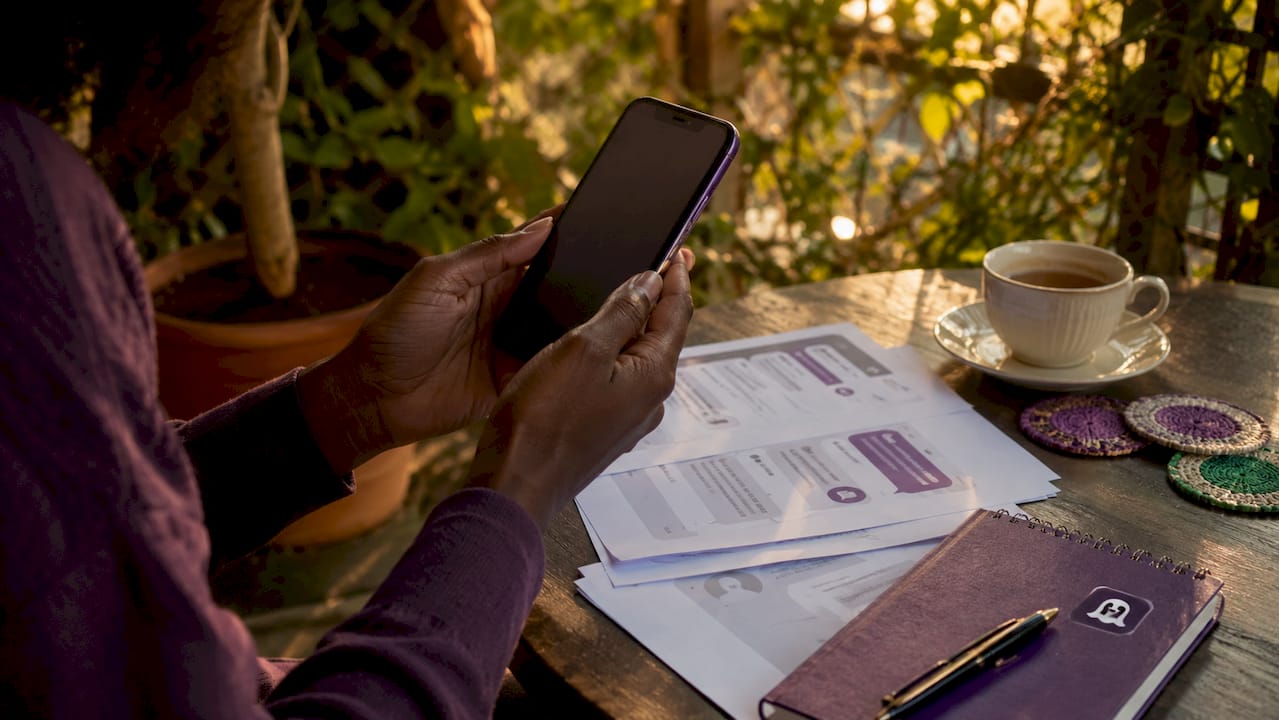
Inconsistent communication patterns are a red flag that most people underestimate. Rapid disappearance and reappearance without explanation destabilizes trust and signals poor boundary management. This behavior often indicates the person is managing multiple targets simultaneously or testing how much you will tolerate before pushing back.
The psychological effect is deliberate. When someone vanishes for three days and returns with a vague excuse, your relief at hearing from them overrides your suspicion. That relief is exactly what a manipulator counts on. Healthy communicators give notice when they will be unavailable. They do not disappear and reappear as if nothing happened.
3. How subtle language patterns reveal controlling personalities
Manipulation in dating messages rarely looks like obvious aggression. It shows up in sentence structure, word choice, and the emotional logic of a conversation.
"The 'Test and Apologize' pattern is a deliberate tactic: the sender pushes a boundary, waits for your reaction, then apologizes just enough to keep you engaged. The goal is not genuine remorse. The goal is to find out how much you will accept before you walk away."
The Test and Apologize pattern is one of the clearest early indicators of a controlling personality. Watch for messages that cross a line, followed immediately by an apology that feels rehearsed rather than sincere. The apology resets the interaction without changing the behavior.
Controlling language also appears in profiles and early messages as rigid directives. Profiles with demanding language framed as non-negotiables reveal controlling tendencies before any meeting occurs. A preference sounds like "I enjoy active people." A directive sounds like "You must be fit and available on my schedule." That distinction matters.
Other patterns to watch for:
- Messages that position the sender as "the prize" you are lucky to have found
- Overly polished, performative messages that feel copied rather than written for you
- Language that implies you owe them a response or attention
4. How your feelings get dismissed in messages
When you express discomfort and the other person calls you "too sensitive" or claims you "misunderstood," that is not a communication error. Dismissing your emotional reactions as overreactions is a core red flag that predicts how future conflict will be handled. It signals that your perceptions will consistently be treated as the problem rather than their behavior.
This pattern is particularly effective in text-based communication because tone is already ambiguous. The sender can always claim they "didn't mean it that way." Pay attention to whether they acknowledge your feeling first or immediately argue against it. Acknowledgment costs nothing. Dismissal is a choice.
5. High-risk signs related to identity and profile authenticity
Profile authenticity is where online dating safety gets technical. Several specific behaviors indicate a person is not who they claim to be.
Stolen or stock profile photos are detectable through a reverse image search using Google Images or TinEye. If the photo appears on multiple unrelated accounts or stock photo sites, the profile is fabricated.
Refusal to do a live video call is a strong warning sign on its own. When someone has a new excuse every time you suggest a video call, that pattern is deliberate. AI-generated avatars and deepfake video calls have made even video verification less reliable. Real people react quickly to spontaneous requests like turning their head or holding up a handwritten word. Deepfakes glitch or lag on unscripted movements.
Timezone and location inconsistencies are easy to spot if you pay attention. Someone who claims to live in Chicago but consistently messages at 3:00 AM local time and references local events that do not match their stated city is likely not where they say they are.
Pro Tip: During a video call, ask the person to wave with their left hand or hold up two fingers. Spontaneous physical requests expose deepfake technology faster than any scripted interaction.
Overly perfect profiles with unrealistic success stories are engineered to impress, not inform. When someone's life reads like a movie script, treat it as a signal to verify, not a reason to trust.
6. Pressure to meet in unfamiliar or unsafe locations
A legitimate match respects your comfort with meeting locations. Pressure to meet somewhere unfamiliar, private, or far from your normal area early in communication is a safety red flag. The location choice tells you how much the other person values your sense of security.
Safe first meetings follow a consistent pattern: public place, daytime or early evening, location you chose or agreed on together. Any deviation from that standard deserves a direct conversation. If they push back on your preference for a public location, that reaction is itself a warning sign.
7. How to respond when you spot warning signs in dating app messages
Knowing the warning signs is only half the work. Responding effectively protects you from escalating harm.
- Prioritize behavior over words. Trust built on corroborated behavior, such as consistent answers and willingness to meet, is the only reliable trust in online dating. Verbal reassurances cost nothing to fake.
- Set a clear boundary and watch the response. Tell them you are not comfortable moving to a different app yet. A trustworthy person accepts that. A manipulator argues, guilt-trips, or disappears.
- Use reverse image search before investing emotionally. Run their profile photo through Google Images before the first week is over. This takes 30 seconds and can save months of wasted time.
- Never send money or share sensitive information. No legitimate romantic interest asks for financial help before meeting in person. No exception.
- Report and block without guilt. Dating platforms have reporting tools for a reason. Using them protects the next person who encounters the same account.
Pro Tip: Paste suspicious messages into Ghosttextai to get an instant read on tone, intent, and emotional signals. It takes seconds and removes the guesswork from ambiguous conversations.
Key takeaways
Recognizing red flags in online dating messages requires watching for specific patterns of pressure, inconsistency, and emotional manipulation rather than relying on gut feeling alone.
| Point | Details |
|---|---|
| Rushed emotional intensity | "I love you" within days is a manipulation tactic, not genuine connection. |
| Off-platform pressure | Moving to WhatsApp or Telegram within hours signals a likely scam. |
| Small money requests | Any financial ask, even $50, is a test before larger demands follow. |
| Dismissal of your feelings | Calling you "too sensitive" predicts how all future conflict will be handled. |
| Behavior over words | Consistent answers and willingness to meet are the only reliable trust signals. |
What I've learned from watching people ignore the obvious
DSean here. The most common mistake I see is not failing to notice red flags. It is noticing them and explaining them away. Someone gets a message that feels off, and instead of trusting that feeling, they spend 20 minutes constructing a reason why it is probably fine. That mental energy is the manipulation working exactly as intended.
The second mistake is treating each red flag as an isolated incident. One vague answer is nothing. One vague answer plus a request to move to Telegram plus a refusal to video call is a pattern. Patterns are what matter. Corroborated behavior is the only honest measure of someone's intent online.
Digital literacy changes everything here. People who understand rhetorical tactics, who recognize the Test and Apologize pattern or the "I'm the prize" framing, are significantly harder to manipulate. That knowledge is not cynicism. It is protection. And if you are ever genuinely unsure whether a message is suspicious, ask a trusted friend to read it cold, without context. Fresh eyes catch what familiarity hides.
— DSean
Ghosttextai helps you read between the lines
Spotting warning signs in dating messages gets harder when you are emotionally invested. Ghosttextai is an AI-powered communication coach that analyzes tone, intent, and emotional signals in any conversation. You paste a message or upload a screenshot, and it tells you what the language actually signals, including hidden red flags that are easy to miss when you are hoping for the best.
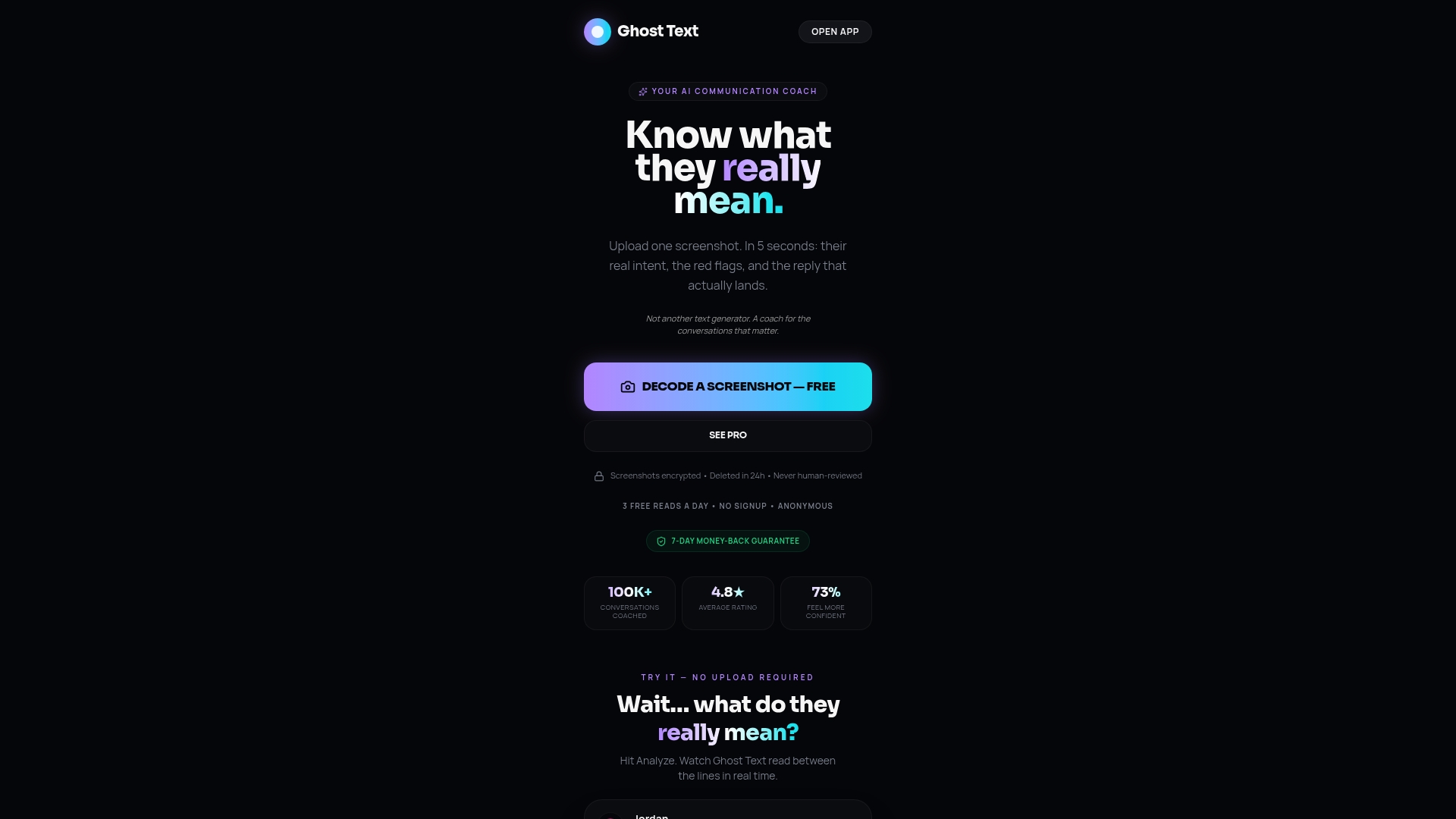
Ghosttextai works across dating, friendships, and professional conversations. Whether you are reading a message that feels slightly off or trying to craft a reply that sets a clear boundary, it gives you the clarity to respond with confidence instead of anxiety. You can learn more and try it at ghosttextai.com.
FAQ
What counts as a red flag in a dating app message?
A red flag in a dating app message is any communication pattern that signals deception, manipulation, or unsafe intent. Common examples include rushed declarations of love, requests to move off-platform, and small financial asks.
How fast should I trust someone I meet online?
Trust in online dating should be based on consistent behavior over time, not verbal reassurances. Healthy emotional attachment typically develops over weeks to months, not days.
Can video calls confirm someone's identity?
Video calls help but are not foolproof. AI-generated deepfakes can pass basic video verification, so ask for spontaneous, unscripted physical gestures to expose fakes.
What should I do if someone asks me for money online?
Treat any financial request as a critical warning sign, regardless of the amount. Small requests signal a test before larger demands follow, and no legitimate romantic interest asks for money before meeting in person.
How do I know if a message is manipulative?
Watch for the Test and Apologize pattern, dismissal of your feelings, and language that positions the sender as entitled to your attention. These manipulation tactics appear in early messages and predict future behavior accurately.