
Dark psychology texting is the deliberate use of psychological tactics through text messages to control, deceive, or emotionally destabilize another person. Unlike face-to-face manipulation, texting gives the manipulator a unique advantage: full control over timing, tone, and information. The medium is permanent, asynchronous, and deeply ambiguous, which makes it fertile ground for covert persuasion. Recognizing these tactics is the first step toward protecting your emotional health and communicating on your own terms.
What are common dark psychology texting tactics?
Manipulative texting techniques follow recognizable patterns. The most common involve exploiting the gaps that text communication naturally creates: silence, ambiguity, and the reader's tendency to fill in missing information with their worst fears.
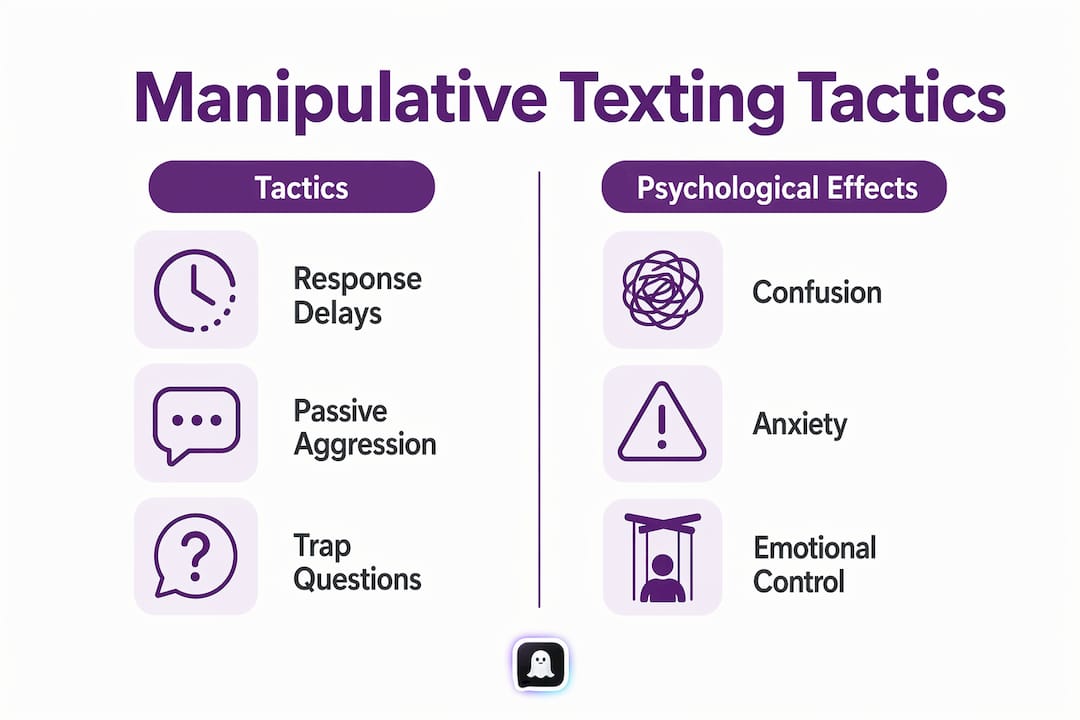
Response time manipulation is one of the most widely used tactics. A manipulator goes silent for hours, then sends a casual, cheerful message as if nothing happened. Strategic response delays create anxiety and establish a power imbalance. The double standard is the tell: they demand fast replies from you while offering none themselves.

Passive-aggressive tone hides in plain sight. Periods in casual texts are perceived as cold or clipped rather than grammatically correct. "Fine." or "No problem." signals displeasure while maintaining plausible deniability. The manipulator can always say, "I didn't say anything wrong," because technically they didn't.
Absolute language and trap questions are another staple. Phrases like "You always do this" or "You never care" force the recipient into a defensive position. There is no clean answer. Any response either confirms the accusation or opens a new argument.
The disappearance and reappearance cycle is particularly damaging in romantic relationships. The manipulator goes silent for days, then returns without explanation or resolution. This cycle induces anxiety and conditions the recipient to feel relief, rather than anger, when contact resumes.
The Zeigarnik Effect explains why incomplete messages are so powerful. Unfinished message threads exploit the brain's tendency to fixate on unresolved information. A manipulator who ends a conversation mid-thought or sends "We need to talk" without follow-up keeps the recipient mentally hooked for hours.
Pro Tip: Screenshot messages that feel off to you. Reviewing them later, out of the emotional moment, often makes the pattern far clearer.
How does texting psychology reveal manipulation vulnerability?
Every text carries a psychological fingerprint. The way someone writes, not just what they write, reveals their emotional state, attachment style, and intent.
Punctuation, emoji use, and message length all function as emotional signals. Heavy emoji use correlates with warmth and social closeness. Their deliberate absence can signal coldness or emotional withdrawal. Capitalization signals urgency or anger. Short, clipped messages signal disengagement. Manipulators learn these signals and weaponize them.
Attachment styles play a central role in manipulation vulnerability. Anxious texters message frequently and fast, while avoidant texters withdraw under emotional pressure. A manipulator paired with an anxious texter has a ready-made lever: silence. Withholding responses triggers the anxious person's fear of abandonment, making them easier to control.
Manipulators also mimic genuine communication cues to build false trust. They may mirror your texting style early in a relationship, matching your pace and warmth, then gradually shift to colder, more erratic patterns. By the time the shift is noticeable, emotional dependency is already established.
| Texting behavior | What it signals | How manipulators exploit it |
|---|---|---|
| Long response delays | Avoidance or disinterest | Used to create anxiety and power imbalance |
| Clipped punctuation | Coldness or passive aggression | Deniable emotional punishment |
| Excessive questioning | Anxiety or need for reassurance | Framed as concern to mask control |
| Incomplete messages | Unresolved tension | Exploits Zeigarnik Effect to maintain fixation |
| Sudden warmth after silence | Relief response in recipient | Conditions emotional dependency |
Artificial anticipation tactics like typing indicators that appear and disappear exploit the same cognitive tendency. The recipient watches the dots, waits, and becomes mentally fixated. The manipulator controls attention without sending a single word.
How do you recognize manipulative texting patterns in your conversations?
Manipulation reveals itself through patterns, not isolated incidents. A single delayed reply means nothing. A consistent pattern of delays paired with emotional baiting means everything.
Therapists recommend reviewing recent texts systematically to detect recurring behaviors like guilt induction or unanswered questions. This is not about paranoia. It is about treating your own conversation history as evidence rather than emotion.
Here is a practical framework for self-analysis:
- Scroll back two to four weeks in the conversation. Look for repeated behaviors, not one-off moments.
- Count unanswered questions. If your direct questions consistently go ignored or deflected, that is a pattern worth noting.
- Track response timing. Does the other person respond fast when they want something and go silent when you need something?
- Look for non-apologies. Phrases like "I'm sorry you feel that way" or "I was just joking" appear repeatedly in controlling message patterns.
- Note reappearances without resolution. If conflict is consistently followed by casual contact rather than discussion, the cycle is intentional.
Pro Tip: Copy a suspicious conversation into a plain text document and read it without the visual context of the chat app. The patterns become much harder to rationalize away.
Text messages provide a permanent, reviewable record that face-to-face or phone conversations do not. That permanence is your advantage. Use it.
The hardest part of this analysis is distinguishing manipulation from normal communication friction. Someone who is genuinely busy may reply slowly. Someone who is conflict-averse may avoid direct questions. The difference is consistency and intent. Manipulators apply these behaviors selectively and strategically, not universally. If the pattern only appears when it benefits them, that tells you what you need to know.
How can you protect yourself from manipulative texting tactics?
Protecting yourself starts with emotional regulation. Manipulative texting is designed to provoke a reaction. An impulsive reply gives the manipulator exactly what they want: proof that they control your emotional state.
- Pause before responding. A 10-minute wait before replying to a provocative message is not weakness. It is the most effective way to respond from a position of clarity rather than anxiety.
- Use the grey rock technique. Respond to provocative or baiting messages with brief, neutral, factual replies. "Okay." "Got it." "I'll think about it." This removes the emotional fuel the manipulator depends on.
- Set response time expectations explicitly. Tell the other person directly: "I don't always reply immediately, and that's normal for me." This removes the power of their silence as a tool against you.
- Focus strictly on what was asked. Do not engage with provocative statements embedded in messages. Reply only to the factual question, if there is one. Ignore the bait.
- Document and discuss. Share screenshots with a trusted friend, therapist, or counselor. Outside perspective cuts through the confusion that manipulation is designed to create.
Genuine confidence in texting shows up as natural timing and spontaneous pacing, not calculated delays or response games. When you respond because you have something meaningful to say, rather than because you are managing someone's perception of you, the dynamic shifts.
Pro Tip: If a conversation consistently leaves you feeling confused, guilty, or anxious, that emotional response is data. Trust it.
Knowing when to disengage is a skill. Not every conversation deserves a response. Not every manipulator deserves access to your attention. If the pattern is entrenched and the person shows no willingness to communicate honestly, disengagement is not avoidance. It is a boundary.
Key Takeaways
Recognizing dark psychology texting requires spotting consistent patterns across conversations, not reacting to isolated moments, and responding with emotional control rather than impulsive engagement.
| Point | Details |
|---|---|
| Patterns over incidents | Manipulation shows up as repeated behaviors, not single events. |
| Texting style carries meaning | Punctuation, timing, and emoji use all signal emotional intent and vulnerability. |
| Permanent record is your advantage | Text conversations can be reviewed systematically to detect manipulation. |
| Grey rock reduces manipulator power | Neutral, brief replies remove the emotional fuel that controlling texters depend on. |
| Emotional response is data | Consistent confusion or anxiety after texting is a reliable signal of manipulation. |
What I've learned from watching manipulation play out in text
The most insidious thing about dark communication tactics in texting is how reasonable each individual message looks in isolation. A delayed reply. A short answer. A "just checking in" after days of silence. None of it looks alarming on its own. That is exactly the point.
What I have observed, across years of studying digital communication patterns, is that people rarely trust their instincts early enough. They rationalize. They give the benefit of the doubt. They assume the other person is just busy, just stressed, just having a rough week. By the time the pattern is undeniable, significant emotional damage has already been done.
The most useful reframe I can offer is this: manipulation in texting is not about any single message. It is about who holds the power in the conversation over time. Ask yourself who initiates, who waits, who apologizes, and who sets the emotional tone. The answers are almost always in the conversation history, not in your memory of how the relationship feels.
Awareness does not fix a manipulative relationship. But it does give you back your footing. Once you see the pattern clearly, you stop blaming yourself for the confusion it creates. That clarity is worth more than any clever reply strategy.
— DSean
Ghosttextai can help you read between the lines
Spotting manipulation in your own conversations is genuinely hard. You are too close to the dynamic, too invested in the relationship, and too aware of the other person's explanations. An outside perspective changes everything.

Ghosttextai is an AI-powered communication coach that analyzes your actual conversations, not your memory of them. Paste a conversation or upload a screenshot, and Ghosttextai surfaces the tone, intent, emotional signals, and red flags embedded in the text. It also suggests replies that keep you grounded rather than reactive. Whether you are navigating a confusing dating situation, a tense friendship, or a difficult family dynamic, Ghosttextai gives you the clarity to respond with confidence rather than anxiety.
FAQ
What is dark psychology texting?
Dark psychology texting is the use of deliberate psychological tactics through text messages to control, manipulate, or emotionally destabilize another person. Common methods include strategic silence, passive-aggressive tone, absolute language, and incomplete messages that exploit the Zeigarnik Effect.
How do I know if someone is manipulating me through texts?
Look for consistent patterns rather than isolated incidents. Repeated response delays paired with demands for your immediate replies, recurring non-apologies, and unanswered direct questions are reliable signs of manipulative texting behavior.
Can texting style reveal someone's true intentions?
Yes. Punctuation, emoji use, and message timing all function as emotional signals. Manipulators learn these cues and use them deliberately to create specific emotional responses in the recipient.
What is the grey rock technique in texting?
The grey rock technique means responding to provocative or baiting messages with brief, neutral, factual replies. It removes the emotional reaction the manipulator depends on and reduces their incentive to continue the behavior.
When should I seek professional help for manipulative texting?
Seek support from a therapist or counselor when the pattern is entrenched, when you feel consistently anxious or confused after conversations, or when disengaging feels impossible. A professional can help you identify the dynamic clearly and build a plan to address it.