
What every effective reply actually needs
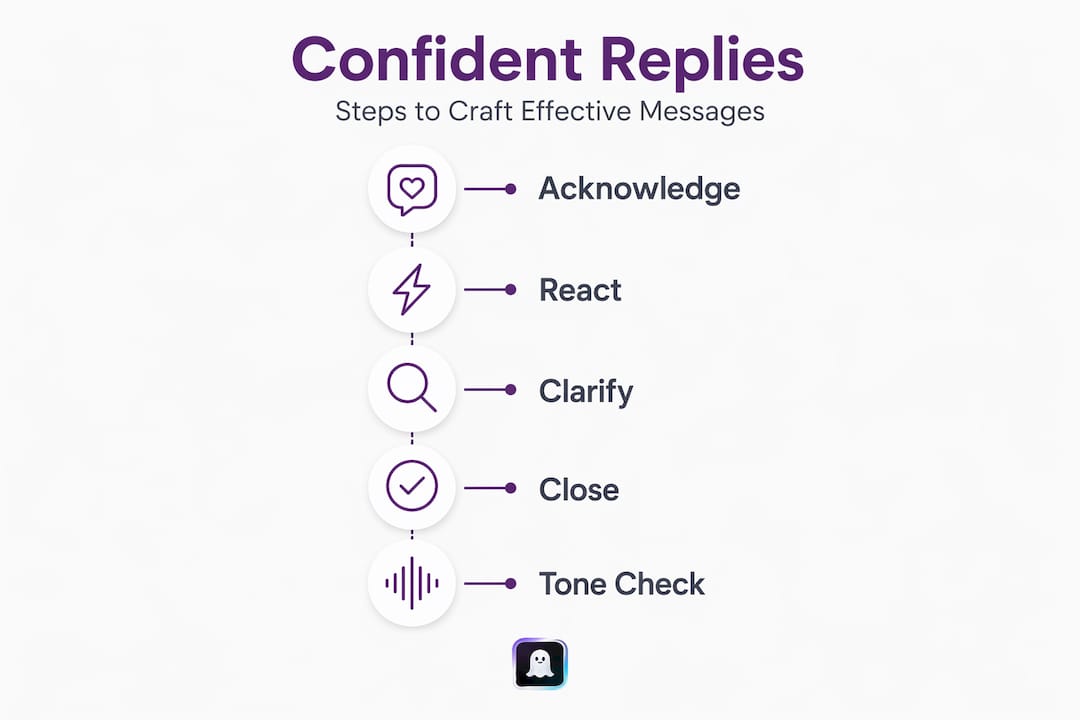
Knowing how to reply to a good message comes down to three things: acknowledge what was said, add a genuine reaction, and leave the door open for the next exchange. That's the whole structure. You don't need perfect wording. You need clarity and a tone that fits the moment.
Here's what each element does:
- Acknowledge: Prove you actually read the message. Reference something specific. "That part about your trip had me laughing" lands better than a generic "haha."
- React: Add one honest response, whether that's warmth, excitement, or humor. This is where your personality shows up.
- Open a door: Give the other person an easy next step. A question, a light observation, or a simple invitation keeps the conversation moving.
As communication research puts it, the best reply isn't always the funniest or most elaborate. It's the one that fits the conversation, sounds like you, and gives the other person a clear path forward. That principle holds whether you're texting a close friend, replying to a colleague's kind email, or responding to someone you just started dating.
Tone alignment matters more than word choice. A warm message deserves a warm reply. A casual one doesn't need a formal response. Match the energy, then add your own.
Table of Contents
- How to reply to compliments without making it awkward
- Why tone and intent shape every reply you send
- How AI-powered coaching helps you craft better replies
- Ghosttextai makes thoughtful replies easier
- Key Takeaways
How to reply to compliments without making it awkward
Compliments are surprisingly hard to receive well. Most people either deflect ("Oh, it was nothing") or over-explain ("I actually almost didn't do it, and then..."). Both responses make the complimenter feel like their kindness landed wrong.
The better approach, according to communication expert Jessica Chen, involves three steps:
- Express gratitude directly. "Thank you, that genuinely means a lot" is enough on its own.
- Accept the praise without deflecting. Resist the urge to minimize. Saying "I got lucky" when someone compliments your work dismisses both the compliment and your own effort.
- Add context or reciprocate. This deepens the exchange. "I've been working on that for months, so hearing that feels great" or "That means a lot coming from you" keeps the conversation alive.
Deflecting compliments is more common than people realize, often because accepting praise feels like arrogance. It isn't. Gracious acceptance actually builds connection and self-esteem for both people in the exchange.
In a professional context: "Thank you, I put a lot of thought into that proposal. I'm glad it came through clearly."
In a personal context: "Aw, thank you! That honestly made my day."

Pro Tip: Keep it short. A one or two sentence response to a compliment is almost always the right length. The longer you go, the more it starts to feel like a speech.
Etiquette coach Lynda Jean puts it plainly: be gracious and say, "Thank you, that means so much to me." No performance required.
Why tone and intent shape every reply you send
Text messages strip out vocal cues entirely. No tone of voice, no facial expression, no pause for effect. That compression means a message that reads as warm to the sender can land as flat or even cold to the receiver, and vice versa.
Before you reply, spend a few seconds reading for these signals:
- Word choice: Casual slang signals a relaxed tone. Full sentences with punctuation usually mean the sender is being more deliberate.
- Length: A long, thoughtful message usually wants a thoughtful reply. A two-word text doesn't need a paragraph back.
- Context: What's the relationship? What happened before this message? A "great job today" from your manager hits differently than the same words from a close friend.
Misreading these signals is where most reply mistakes happen. Sending a jokey response to a sincere message makes you seem dismissive. Sending a heavy, emotional reply to a light check-in can feel like too much. Matching the relationship and intent matters more than finding the perfect sentence.
A few common mistakes to avoid when responding to positive messages:
- Replying from anxiety. Overthinking produces over-long, over-explained messages that put your discomfort on the other person.
- Adding a tone line only when you need it. If your reply is brief and could read as cold, one warm phrase ("Really glad to hear that") fixes it without padding the whole message.
- Matching every reply to a formal template. A close friend doesn't want a professional sign-off. A work colleague doesn't need three exclamation points.
The relationship determines the register. A quick "thanks, that's awesome!" works perfectly for a friend. For a mentor or manager, "I really appreciate you saying that, it's helpful to hear" fits the dynamic better.
How AI-powered coaching helps you craft better replies
This is where things get genuinely useful. Knowing the structure of a good reply is one thing. Applying it in real time, when you're anxious about a message or unsure how someone meant something, is harder.
Ghosttextai is built for exactly that gap. Paste a conversation or upload a screenshot, and the platform analyzes tone, intent, and emotional signals instantly. It doesn't just tell you what the message means. It gives you multiple reply options, each calibrated to a different tone, so you can pick the one that sounds like you.
Key features that make this practical:
- Tone and intent analysis: Understand whether a message is warm, guarded, enthusiastic, or ambiguous before you reply.
- Red flag detection: Spot patterns that signal mixed signals, disinterest, or something worth addressing.
- Interest meter: Get a read on where the other person is emotionally in the conversation.
- Suggested replies with persona customization: Choose from casual, direct, or warm reply styles. Adjust for dating, friendship, family, or professional contexts.
For anyone who's ever stared at a message for ten minutes without knowing what to say, AI communication coaching removes the guesswork. You still choose the reply. The AI just makes sure you're choosing from options that actually fit the moment.
If you want to explore how AI models can be tuned to match your personal voice and style, Prose Coach is worth a look as a complementary tool for building that kind of consistency.
Ghosttextai works across every context where good replies matter: dating conversations, friendships, family dynamics, and professional exchanges. The free version gives you a real taste of the analysis. Ghost Text Pro unlocks unlimited reads, advanced red flag detection, and premium persona options.
Ghosttextai makes thoughtful replies easier
Reading a good message and knowing exactly how to respond is a skill. Ghosttextai gives you the analysis to build it faster.
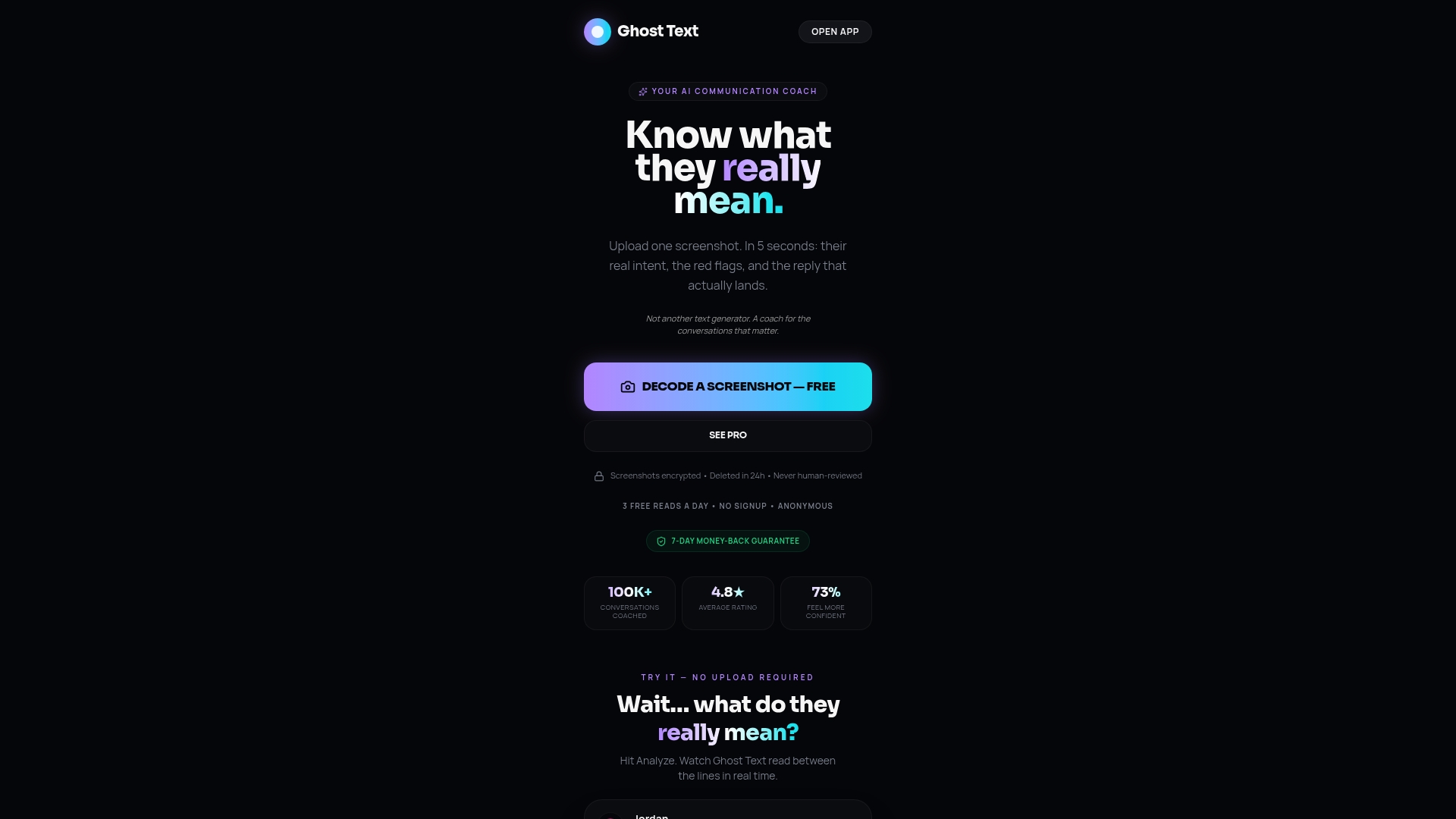
Paste any conversation into Ghosttextai and get instant insight into tone, intent, and emotional signals, plus suggested replies you can actually use. Whether you're navigating a tricky text from someone you're dating, a warm message from a colleague, or a heartfelt note from a family member, the platform helps you respond with clarity instead of second-guessing every word.
Setup takes under a minute. No communication degree required. Try Ghosttextai free and see what your messages are really saying.
Key Takeaways
Replying well to a good message means acknowledging what was said, reacting sincerely, and giving the other person a clear and easy path to continue the conversation.
| Point | Details |
|---|---|
| Use the three-part structure | Acknowledge, react, and open a door to keep conversations natural and productive. |
| Accept compliments directly | Express gratitude without deflecting; gracious acceptance builds connection, not arrogance. |
| Match tone to the relationship | Casual messages need casual replies; professional contexts call for measured warmth. |
| Add a tone line when needed | Brief replies can read as cold without one short phrase to signal genuine intent. |
| Ghosttextai removes the guesswork | Paste any conversation to get instant tone analysis and tone-matched reply suggestions across dating, friendship, and professional contexts. |