
Stopping drama with friends is defined as the deliberate practice of interrupting conflict cycles through calm communication, clear boundaries, and emotional self-regulation. Friend drama is not just a teenage problem. Adults lose sleep, cancel plans, and end years-long relationships over misunderstandings that could have been resolved with one honest conversation. The good news is that conflict resolution research points to specific, repeatable techniques: the "pause, breathe, and redirect" method, "I" statement boundary-setting, and emotional agility. These are not vague suggestions. They are skills you can use starting today.
How to stop drama with friends by pausing first
The single most effective move in any conflict is to pause before you respond. Pausing before responding reduces escalation and allows clearer communication. That matters because most drama does not start with a real disagreement. It starts with a fast, emotional reply sent before anyone has thought it through.
The "pause, breathe, and redirect" technique works in three steps:
- Pause. When a message or comment triggers you, do not reply immediately. Put your phone down for at least 10 minutes.
- Breathe. Use a simple breathing reset: inhale for four counts, hold for four, exhale for four. This lowers your physiological stress response.
- Redirect. Shift your focus to what outcome you actually want. Ask yourself: "Do I want to win this moment or keep this friendship?"
Practiced communicators avoid debating facts during drama. They manage emotional energy by stepping back or redirecting conversations to neutral topics. This is a counterintuitive insight: the content of the argument almost never matters as much as the emotional temperature of the exchange. Lowering that temperature is the real goal.
Pro Tip: If you are responding to a charged text message, draft your reply in your notes app first. Read it back 15 minutes later. You will almost always soften it before sending.

How do you set boundaries to avoid friend drama?
Boundaries are the most underused tool in friendship conflict. Most people either say nothing and build resentment, or they explode after holding it in too long. Neither works. The middle path is assertive, early communication using "I" statements.
"I" statements reduce defensiveness because they describe your experience rather than accusing the other person. Compare these two phrases:
- "You always drag me into your problems."
- "I feel overwhelmed when I'm pulled into conflicts that don't involve me."
The second version says the same thing without putting the other person on the defensive. Being direct with boundaries is the kindest and clearest way to treat friends, contrary to the misconception that directness is mean. Directness removes ambiguity. Ambiguity is where drama lives.
When a friend tries to pull you into gossip, a phrase like "I understand you're frustrated, but I'm not comfortable talking about [Name]" does two things at once. It validates their emotion and closes the door on the gossip loop. This boundary-setting approach is far more productive for group harmony than rehashing drama.
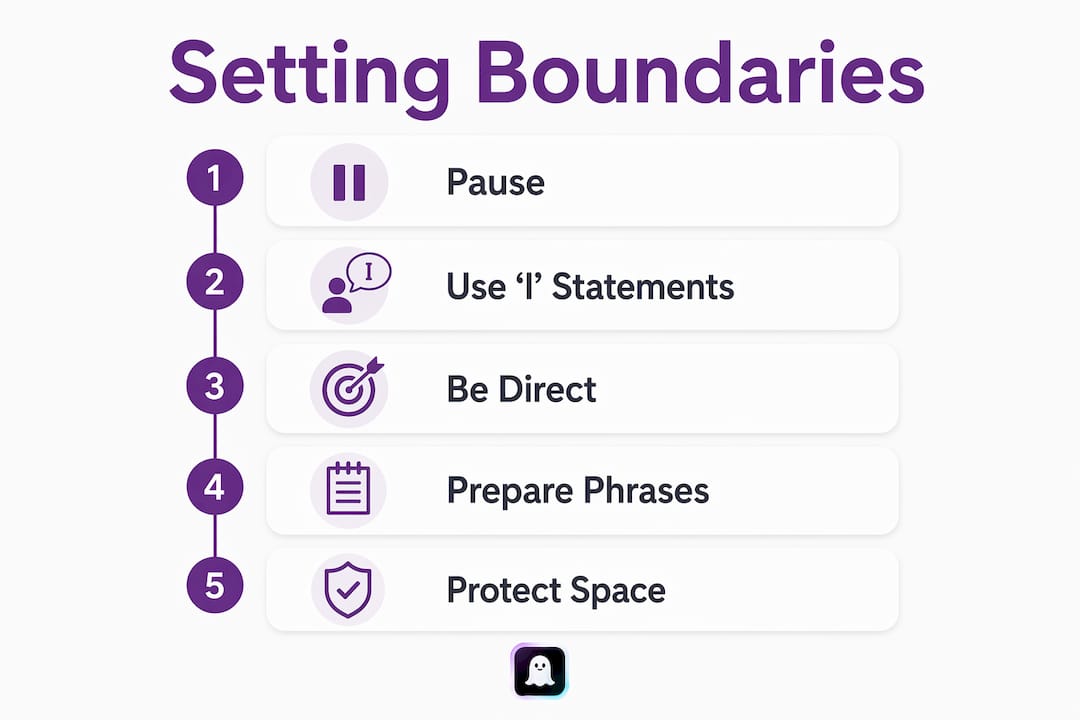
Pro Tip: Write your boundary phrases down before you need them. Having a few go-to lines ready means you won't freeze or say something you regret in the heat of the moment.
Protecting your emotional space is not selfish. Emotional agility is the ability to align with your personal values and not get hijacked by others' volatile emotions. Boundaries are the structure that makes emotional agility possible.
When should you deal with a toxic friendship directly?
Not all friend drama is equal. Occasional conflict is normal. Recurring patterns of manipulation, one-sided effort, or constant negativity signal something more serious: a toxic friendship. Recognizing the difference changes how you respond.
Toxic friendships share a few consistent characteristics. The friend regularly puts you down, even in the form of "jokes." They create conflict and then position themselves as the victim. They demand your emotional energy without reciprocating. They pull you into drama with other people repeatedly.
The recommended approach follows a clear sequence:
- Confront the specific behavior directly. Use "I" statements and name the exact pattern. "I've noticed that after we talk, I usually feel worse about myself. I want to talk about that."
- Give the friendship a chance to grow. Providing direct feedback about toxic behavior and offering the friendship a chance to change can save a rare relationship. Some people genuinely do not know how they are coming across.
- Move to low-contact if nothing changes. A "timeout" approach, where interactions remain polite but limited, prevents a harsh breakup while protecting your wellbeing. This is the middle ground between full engagement and ghosting.
Confronting a toxic friend directly about specific behaviors is the first step. If that conversation fails, moving to polite low-contact interactions helps end the toxic dynamic peacefully, without unnecessary cruelty or prolonged emotional fatigue.
The hardest part of dealing with a toxic friendship is accepting that you cannot fix another person. You can only control your own behavior and the access you grant. When repeated conversations produce no change, clarity about ending the friendship is freeing, not cruel. A clean ending causes less long-term pain than years of low-grade resentment.
How do you stay neutral in a friend group conflict?
Being caught between two friends who are fighting is one of the most uncomfortable positions in any social circle. The pressure to pick a side feels enormous. You do not have to pick one.
Strong social ties contribute to wellbeing, but friendships do not need to overlap. You can maintain individual bonds with both people without becoming a messenger or a mediator. The key is communicating that clearly and early.
| Situation | Neutral response |
|---|---|
| Friend asks you to take their side | "I care about both of you. I'm not going to get in the middle of this." |
| Friend asks what the other person said | "That's between you two. I don't want to carry messages." |
| Group event with feuding friends | Invite both, be transparent, let them decide whether to attend. |
| Friend vents repeatedly about the other | Listen once, then redirect: "Have you talked to them directly about this?" |
Expanding the group during tense gatherings also works. Adding two or three neutral people to a gathering makes group dynamics smoother by reducing direct interaction pressure between feuding friends. A larger group naturally diffuses one-on-one tension without requiring anyone to mediate.
A few practical moves for staying neutral:
- Redirect blame-focused conversations toward problem-solving. "What do you actually want to happen here?" cuts through venting fast.
- Avoid sharing what one friend said with the other. Even well-intentioned sharing fuels conflict.
- Be transparent about invitations. If you invite both friends to the same event, tell each of them. Surprises create new drama.
Individuals often mistake venting for problem-solving. Moving from emotional venting to boundary-focused conversations is the key to actual resolution. Your job as a neutral party is to gently push friends toward that shift, not to absorb their emotional output indefinitely.
Key Takeaways
Stopping drama with friends requires pausing before reacting, setting clear boundaries with "I" statements, and recognizing when a friendship has become too toxic to sustain.
| Point | Details |
|---|---|
| Pause before responding | Wait at least 10 minutes before replying to charged messages to lower emotional temperature. |
| Use "I" statements | Frame boundaries around your experience, not the other person's behavior, to reduce defensiveness. |
| Address toxic patterns directly | Name specific behaviors calmly and give the friendship a chance to change before distancing. |
| Stay neutral in group conflicts | Maintain individual bonds without carrying messages or picking sides between feuding friends. |
| Redirect venting to problem-solving | Ask "What do you want to happen?" to move conversations from emotional loops to real solutions. |
The uncomfortable truth about friend drama I had to learn the hard way
Most advice on how to handle friend disagreements focuses on the other person. Fix the toxic friend. Avoid the gossip. Manage the group. That framing misses the real problem.
The real problem is that most of us were never taught to sit with discomfort long enough to respond thoughtfully instead of reactively. I spent years thinking I was good at conflict because I stayed calm on the surface. What I was actually doing was avoiding. Calm avoidance and genuine peace are not the same thing.
The shift happened when I started treating honesty as an act of care rather than a risk. Honesty paired with kindness eliminates ambiguity and allows relationships to heal or end cleanly. That sentence sounds simple. Living it is harder. It means saying the uncomfortable thing early, before resentment builds, and trusting that a real friendship can handle it.
The other thing I had to unlearn was the idea that being a good friend means being available for everything. It does not. Choosing where you invest your emotional energy is not abandonment. It is how you protect the friendships that actually matter. The friends worth keeping are the ones who respect that.
— DSean
What Ghosttextai can do when messages get complicated
Friend conflicts rarely stay face-to-face. They play out in texts, group chats, and screenshots shared at 11 PM. Reading tone in a message is genuinely hard, and misreading it is one of the fastest ways to turn a small disagreement into a full breakdown.
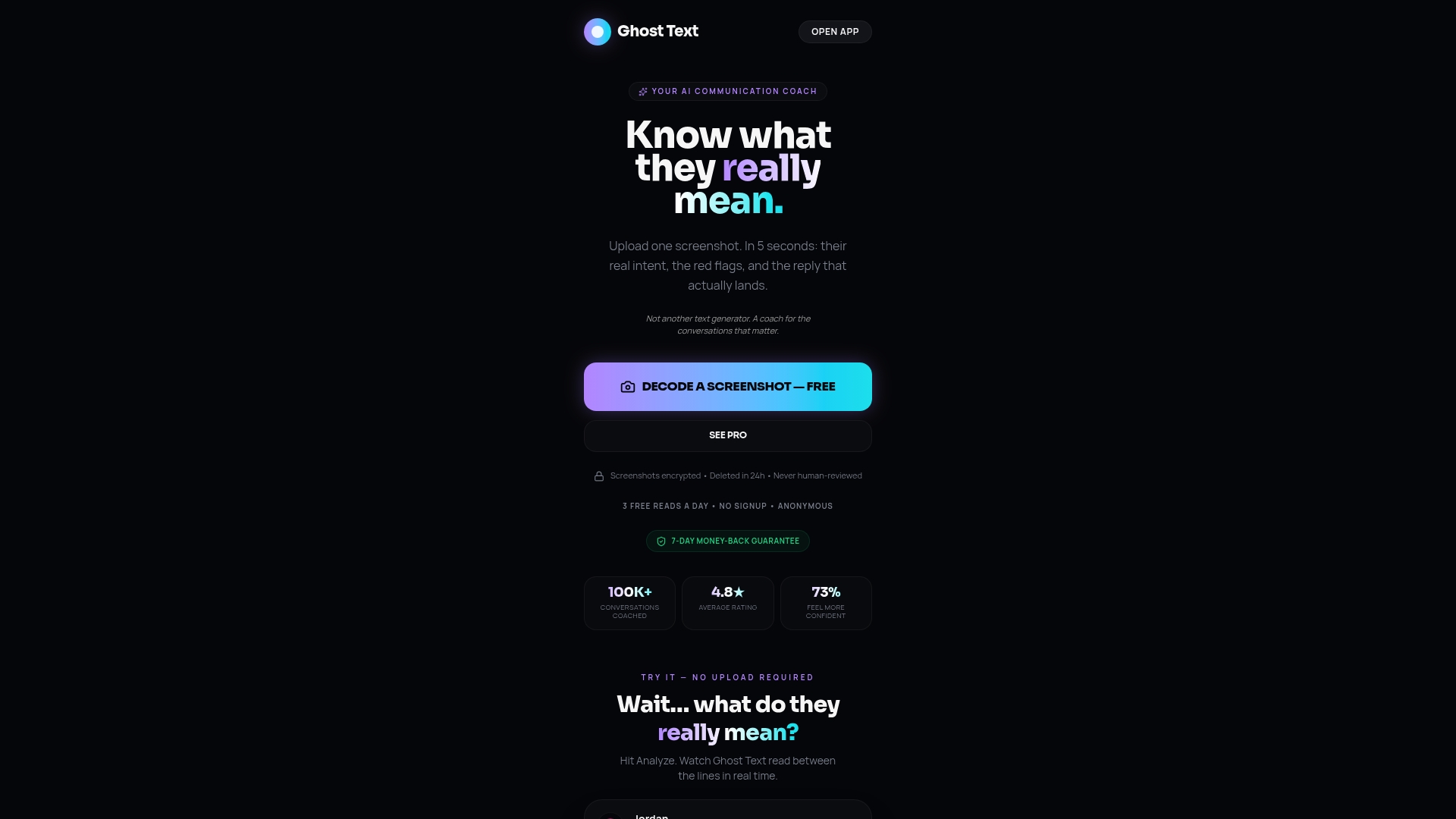
Ghosttextai is an AI-powered communication coach that reads conversations for tone, intent, emotional signals, and red flags before you respond. You paste a message or upload a screenshot, and Ghosttextai tells you what it actually means, not just what it says. That gap between meaning and words is where most friend conflicts start. Ghosttextai also suggests replies that are clear, calm, and less likely to escalate. If you are trying to protect a friendship while navigating a charged conversation, having that kind of clarity before you hit send makes a real difference.
FAQ
What is the fastest way to stop drama with friends?
Pause before responding to any charged message or comment. The "pause, breathe, and redirect" technique prevents impulsive reactions and gives you time to choose a calm, clear response.
How do I set boundaries without losing the friendship?
Use "I" statements that describe your experience rather than accusing the other person. Phrases like "I'm not comfortable talking about this" validate feelings while closing the door on gossip or conflict loops.
How do you handle friend group drama without picking sides?
Maintain individual bonds with each person and communicate transparently about group events. Redirect conversations from venting to problem-solving by asking "What do you actually want to happen?"
When should you end a toxic friendship?
End a friendship when repeated direct conversations about specific behaviors produce no change. Clear communication about ending a friendship causes less long-term pain than sustained resentment.
Does avoiding drama mean avoiding conflict entirely?
No. Avoiding drama means choosing how and when to engage, not refusing to address problems. Honest, early conversations prevent small issues from becoming recurring conflicts.