
What an AI communication coach actually does
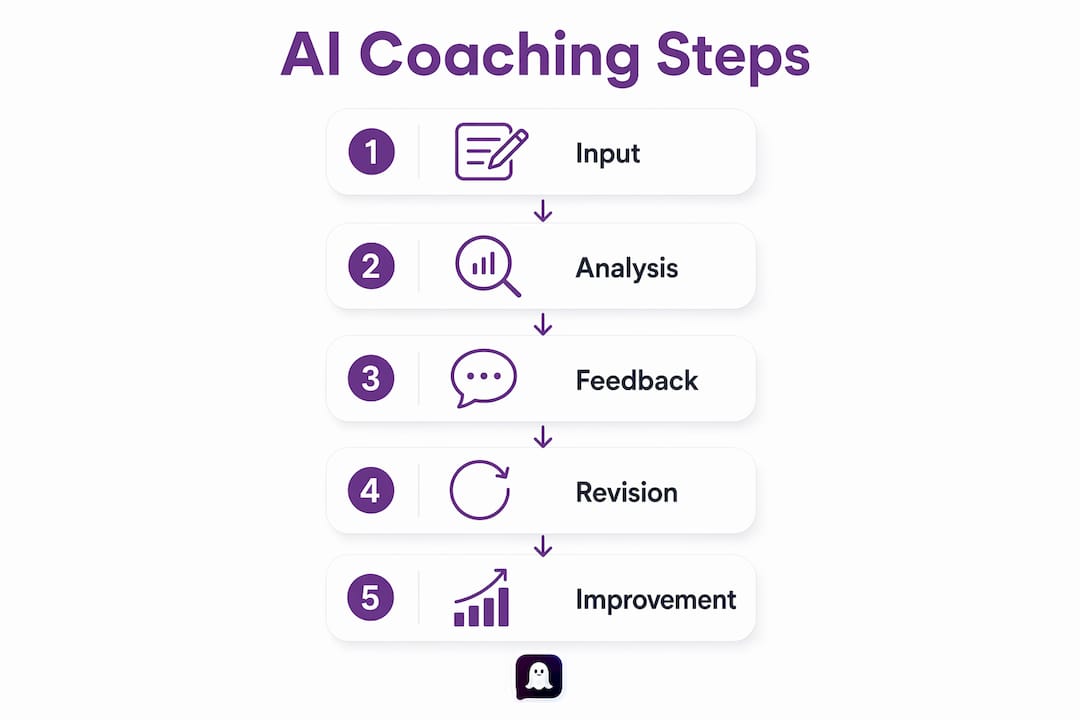
A poised AI communication coach is a tool that reads your messages and tells you what is really going on before you hit send. Not in a vague "sounds a bit cold" way. It detects tone, emotional signals, intent, and red flags with enough specificity to change how you respond.
Here is what the core functions look like in practice:
- Message analysis: The AI scans text for emotional undertones, urgency, passive aggression, or warmth that you might miss when you are too close to the conversation.
- Red flag detection: Patterns like deflection, manipulation, or sudden distance get flagged before you rationalize them away.
- Reply suggestions: You get contextually tailored responses with tone and style options, so you can match the moment whether it calls for directness or diplomacy.
- Screenshot uploads: Paste a conversation or upload a screenshot and get instant AI insights on what the other person is actually communicating.
- Privacy-first feedback: Analysis happens without social pressure, judgment, or the awkwardness of asking a friend to weigh in on your texts.
Ghosttextai is built around exactly this model, giving users clarity on mixed signals and suggested replies calibrated to the specific relationship context.
Table of Contents
- How AI reads the emotional layer of your messages
- Where AI communication coaching fits into your daily life
- Why AI coaching outperforms traditional communication training
- How to get real results from your AI communication coach
- What AI communication coaching looks like in practice
- Ghosttextai gives you clarity before you respond
- Key Takeaways
How AI reads the emotional layer of your messages
Natural language processing lets AI do something humans struggle with: assess tone without emotional investment. When you are anxious about a text from someone you are dating, you read what you want to read. The AI reads what is there.
- Tone detection: The model identifies whether a message is warm, guarded, dismissive, or escalating, based on word choice, sentence structure, and phrasing patterns.
- Intent signals: Beyond surface meaning, AI picks up on hedging language, vague commitments, or sudden formality shifts that signal something is off.
- Emotional cues: Hesitation markers, abrupt topic changes, and over-explanation often carry more information than the words themselves.
- Objective feedback: As non-judgmental AI feedback research confirms, removing social anxiety from the feedback loop produces more honest, usable insight.
- Personalized replies: The system generates responses fitted to your preferred tone, whether you want to come across as warm, firm, or neutral, and to the specific relationship dynamic at play.
This is where AI coaching separates itself from asking a friend. A friend brings their own history and biases. The AI brings consistency.
Where AI communication coaching fits into your daily life
AI coaching is not just for high-stakes moments. It works across the full range of text-based communication, and the async text analysis advantage means you can pause, get clarity, and respond deliberately instead of reactively.
- Dating: Detect mixed signals, spot early red flags, and craft replies that reflect your actual intentions rather than anxiety-driven impulses.
- Friendships: Catch passive-aggressive undertones or misread a joking tone before you respond in a way that creates unnecessary friction.
- Family: Emotionally charged family threads are where misreading intent causes the most damage. AI gives you a second read before you escalate.
- Work: Professional messaging carries real stakes. Getting tone wrong in a Slack message to your manager or a client email can cost you credibility.
- Privacy: Your conversations stay between you and the tool. No screenshots shared with mutual friends, no social fallout from asking for help.
For anyone integrating AI into their daily communication workflows, the practical entry point is simple: paste the message, read the analysis, send a better reply.
Why AI coaching outperforms traditional communication training
Traditional communication programs have a structural problem. They teach frameworks in a classroom and then send you back into real conversations with no support. The global corporate training market for communication skills is large and continues to grow, yet the gap between training and actual behavior change remains wide.
- Generic content: Most programs are not built for your specific situation, whether that is a difficult family dynamic or a passive-aggressive coworker.
- Single sessions: Knowledge fades without repeated application. Systematic assessment and multi-week engagement drive real behavior change; one workshop does not.
- No real-time support: Traditional coaching happens in a scheduled session. Your difficult text arrives at 10 PM on a Tuesday.
- AI advantage: Immediate, private, consistent feedback on your actual conversations, not hypothetical role-plays.
- Neurological rewiring: Applying new communication patterns repeatedly in real interactions builds the automatic habits that classroom learning cannot.
The core gap in traditional training: knowledge without application does not change behavior. AI coaching closes that gap by meeting you inside the actual conversation.
How to get real results from your AI communication coach
Using an AI coach occasionally produces occasional improvement. Using it consistently, on real messages, produces the kind of pattern shift that sticks.
- Use it on actual conversations: The feedback is only as useful as the material you provide. Real messages, not hypothetical ones.
- Apply suggestions, then reflect: Do not just copy the suggested reply. Notice why the AI flagged the tone it did, and carry that awareness into your next conversation.
- Practice micro-skills: Focus on one thing at a time, like reducing defensive phrasing in work emails or catching when you over-explain in dating texts.
- Pair with peer feedback: AI gives you consistency. A trusted friend or effective communication coach gives you the human perspective. Both together accelerate growth.
- Protect your data: Use tools that are transparent about how conversation data is stored and processed.
Pro Tip: Use your AI coach specifically on the message types that trigger your most reactive responses. That is where automatic patterns live, and where deliberate practice rewires them fastest.
What AI communication coaching looks like in practice
Consider someone navigating a slow-fade in a dating situation. They paste three weeks of texts into an AI coach. The tool identifies a consistent pattern: responses getting shorter, more delayed, and emotionally flatter over time. The user had rationalized each message individually. Seeing the pattern across the full thread changes the read entirely.

In a workplace context, a manager drafts a reply to a frustrated team member. The AI flags the draft as defensive in tone and suggests a reframe that acknowledges the frustration before addressing the substance. The revised message lands differently.
These are not edge cases. They are the everyday moments where AI reply generation and tone analysis produce the clearest return: situations where emotional proximity clouds judgment and a second read changes the outcome.
Ghosttextai gives you clarity before you respond
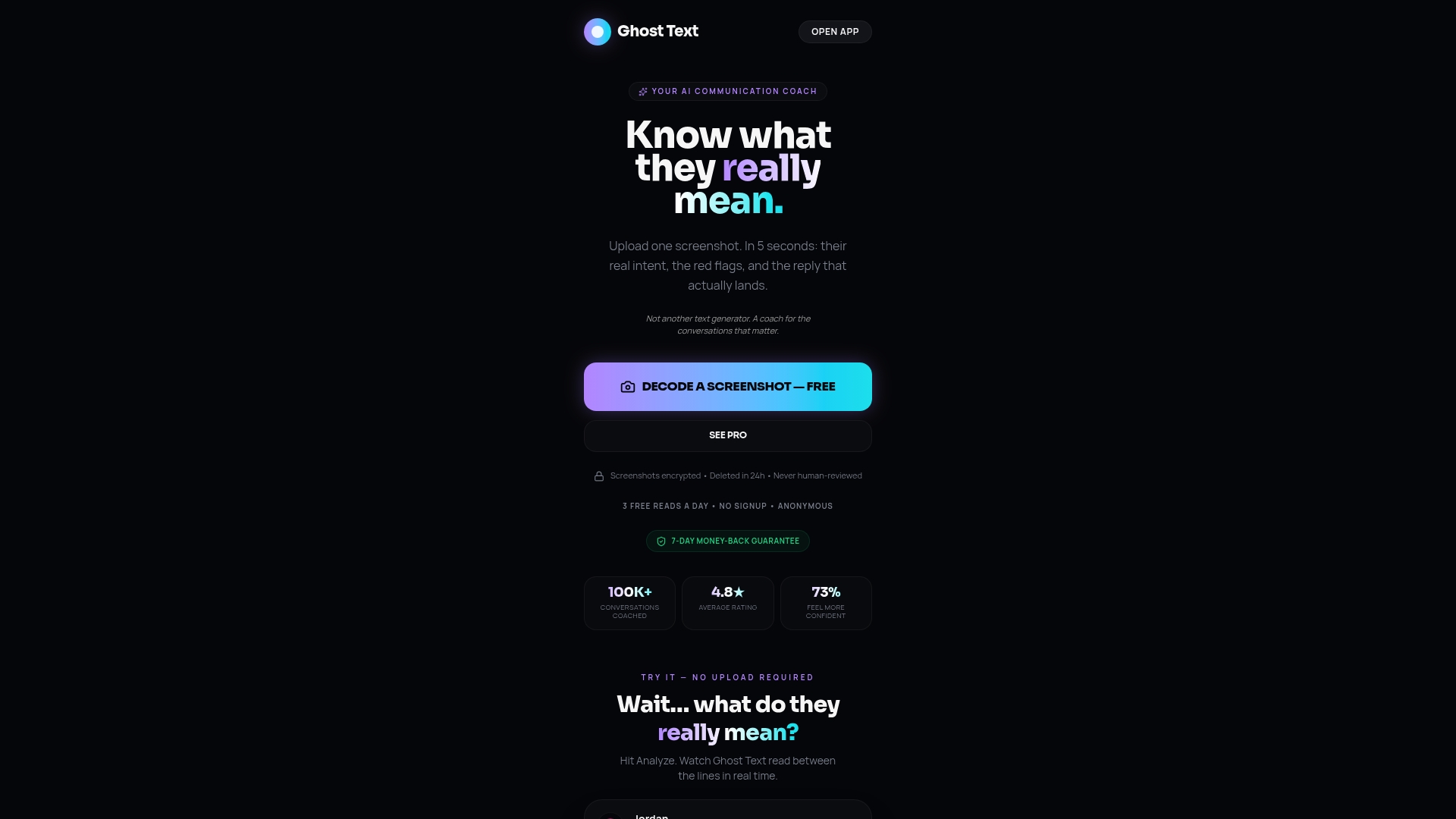
Most people already know when a conversation feels off. What they lack is a clear read on why, and a confident path forward. Ghosttextai is built for that exact moment: upload a screenshot or paste a thread, and get an honest breakdown of tone, intent, red flags, and suggested replies tailored to the relationship and context.
No subscription required to start. Ghost Text Pro unlocks unlimited reads, advanced red flag detection, an interest meter, and premium reply personas for users who want deeper analysis across all their conversations. Try Ghosttextai and know what your messages actually mean.
Key Takeaways
AI communication coaching works because it delivers immediate, objective feedback on real conversations, closing the gap between knowing better and actually responding better.
| Point | Details |
|---|---|
| AI reads what you miss | Tone detection, intent signals, and red flags surface patterns emotional proximity hides. |
| Works across all contexts | Dating, friendships, family, and work messaging all benefit from async AI analysis before you reply. |
| Outperforms single-session training | Multi-week, real-conversation practice drives behavior change that one-off workshops cannot. |
| Consistency is the variable | Applying AI feedback to actual messages, not hypotheticals, builds lasting communication habits. |
| Ghosttextai | Upload a screenshot or paste a thread to get tone analysis, red flag detection, and tailored reply suggestions. |