
If the texts you're receiving feel like a flood of intense affection that arrived too fast and too strong, you're likely looking at love bombing. The core behavior: someone uses overwhelming attention and affection to manufacture emotional attachment before you've had time to decide how you actually feel.
Three things to do right now:
- Set a simple boundary. Text back something like: "I really enjoy talking with you, but I need us to slow the pace a little." Then watch what happens next.
- Pause and observe. Give it 48 hours. A healthy person adjusts. A manipulator escalates, guilt-trips, or goes cold.
- Document the messages. Screenshot the thread and save it somewhere private. You may need it later.
Key Takeaways
Love bombing in texts is identified most reliably by the sender's reaction to a boundary, not by the intensity of the messages alone.
| Point | Details |
|---|---|
| Top red flags in texts | Premature declarations, guilt-framed devotion, volume spikes, and isolation pressure are the clearest signs. |
| The 48-hour boundary test | State one calm boundary, wait 48 hours, and let the response tell you everything you need to know. |
| Document everything | Screenshot and back up the thread; documentation matters if the situation escalates to stalking or threats. |
| When to get help | Contact Love Is Respect, The Hotline, or call 911 if messages include threats, surveillance, or you feel unsafe. |
| Ghosttextai | Upload or paste a suspicious thread to get instant red flag detection, tone analysis, and ready-to-use reply scripts. |
Table of Contents
- What are love bombing texts, exactly?
- How love bombing typically shows up in text messages
- Why love bombing causes real psychological harm
- How to respond when you suspect love bombing in texts
- How to tell love bombing from genuine enthusiasm
- When to get help and where to find it
- How an AI analysis tool can help you spot patterns
- Sources
What are love bombing texts, exactly?
Love bombing is a pattern of intense, accelerated attention designed to create rapid emotional attachment, often before the recipient has any real basis for trust. The mechanism isn't just enthusiasm. It's intensity deployed with a purpose: to make you feel so special, so seen, so chosen that you lower your guard and become dependent on the other person's approval.
The key distinction worth holding onto: not every fast-moving connection is manipulative. Some people are genuinely warm, expressive, and fall hard quickly. University of Colorado Boulder's counseling guidance specifically warns against over-pathologizing early affection. The real diagnostic signal isn't the intensity itself. It's what happens when you slow things down.
A few markers that separate love bombing from genuine enthusiasm:
- Reaction to boundaries: A healthy partner adjusts pace when asked. A love bomber escalates or punishes.
- Reciprocity: Does the other person ask about your life, or mostly talk about how amazing you are?
- Consistency over time: Love bombing tends to peak early, then shift dramatically once attachment is secured.
The neurological hook is real. The dopamine and oxytocin released during intense early attention create a biochemical pull that makes the relationship feel urgent and irreplaceable, even when the behavior is objectively alarming.
How love bombing typically shows up in text messages
Text messages are where this pattern becomes easiest to see, because the volume and velocity are right there in your screen. Love Is Respect identifies excessive compliments, rapid commitment statements, constant messaging, and isolation attempts as the clearest signs, and all of them translate directly to texting behavior.
Here's what each sign looks like in practice:
| Sign | Example Text | What It's Doing |
|---|---|---|
| Volume and velocity | 12 messages in 2 hours with no reply | Creates anxiety and obligation to respond |
| Premature declarations | "I've never felt this way. You're my soulmate." (Day 3) | Manufactures false intimacy fast |
| Generic idealization | "You're literally perfect. I've never met anyone like you." | Flatters without knowing you; mirrors what you want to hear |
| Future-faking | "I already know we're going to get married someday." | Locks in attachment before you've consented to the pace |
| Guilt-framed devotion | "I just care about you so much. Why won't you text me back?" | Disguises control as love |
| Isolation pressure | "You don't need to hang out with them. You have me." | Cuts off outside perspective |
Watch especially for the escalation pattern after a boundary. If you say "I need a little space tonight" and the next message is either a wall of hurt feelings or a sudden cold silence, that reaction tells you more than any single text ever could.

Pro Tip: Screenshot and timestamp any message thread where the volume spikes after you've asked for space. The pattern over days is more telling than any single message, and documentation protects you if the situation escalates. High-frequency messaging in early dating often signals pressure rather than genuine connection, as explored in this piece on texting too much early in dating.
Why love bombing causes real psychological harm
The damage isn't just about feeling uncomfortable. Love bombing is built on a three-stage architecture: idealize, devalue, discard. The intense early phase creates genuine attachment, and then the shift to criticism or withdrawal hits with the force of a loss you weren't prepared for.
Psychologists note that the shift from idealization to devaluation after a boundary is set is actually more diagnostic than the initial intensity. The love bomber isn't just enthusiastic. They're running a cycle. Once you're attached, the affection becomes conditional, used as a reward or withheld as punishment.
The neurochemistry compounds the problem. The dopamine spikes from intense early attention pair with oxytocin-driven bonding. When the affection is withdrawn or becomes unpredictable, the brain responds similarly to withdrawal from a substance. You start working to get the good feeling back, which is exactly the dynamic the love bomber relies on.
Long-term effects on recipients include chronic anxiety, lowered self-esteem, difficulty trusting their own judgment, and in more severe cases, trauma bonding that makes leaving feel genuinely impossible. None of this reflects a failure on your part. The pattern is designed to work.

How to respond when you suspect love bombing in texts
The goal here is clarity, not confrontation. You're not trying to diagnose the other person. You're testing whether they respect you.
- Run an immediate safety check. Are any messages threatening, sexually coercive, or referencing your location or daily routine? If yes, skip to step 5 immediately.
- Set one clear, calm boundary. Keep it simple and non-accusatory.
- Wait 48 hours. Don't explain further. Don't soften it. Just observe the response.
- Escalate to blocking and reporting if the response is threatening, relentless, or punishing.
- Contact emergency services (911) or a hotline if you feel physically unsafe at any point.
Sample reply scripts:
- Polite boundary: "I'm enjoying getting to know you, but I need us to slow down a bit. I'll be in touch when I'm ready."
- Firmer boundary: "The volume of messages is too much for me. I need you to text me once a day at most."
- Exit message: "I've decided I'm not comfortable continuing this. Please don't contact me again."
Clinicians recommend stating the boundary explicitly, something like "I need to take things slowly," and watching the reaction without softening or over-explaining. The other person's response is the data.
Practical steps beyond the scripts:
- Screenshot and back up the full conversation thread.
- Limit your response frequency to reduce the sense of urgency they're manufacturing.
- Tighten your privacy settings: location sharing, read receipts, last-seen status.
- Tell one trusted friend or family member what's happening and share the screenshots with them.
Pro Tip: The 48-hour boundary test is the single most reliable filter. Set the boundary once, clearly, and then go quiet. A secure person will respect it and check in once. A love bomber will flood your inbox, go silent to punish you, or both. Either response is your answer.
How to tell love bombing from genuine enthusiasm
| Behavior | Love Bombing | Genuine Enthusiasm |
|---|---|---|
| You set a boundary | Escalates, guilt-trips, or withdraws | Adjusts pace, thanks you for honesty |
| Self-disclosure | Mostly talks about how great you are | Asks questions, shares vulnerably |
| Compliments | Generic, over-the-top, non-specific | Specific to things they actually know about you |
| Future talk | Plans marriage/moving in within days | Expresses interest in seeing you again soon |
| Consistency | Intense early, then shifts dramatically | Steady warmth that builds gradually |
| Response to "no" | Pressure, hurt, or disappearance | Accepts it without drama |

If you're genuinely unsure, red flags in online dating messages can help you cross-reference specific patterns. When friends or family express concern, take it seriously. They're watching from outside the dopamine loop you're in. University counseling guidance suggests that outside support works best when it's nonjudgmental, holding space for your own processing rather than pushing you toward a conclusion.
When to get help and where to find it
Seek outside help immediately if any of the following are true:
- Messages include threats, references to your location, or language that implies surveillance.
- The person has shown up uninvited at your home, workplace, or regular locations.
- You feel afraid, not just confused or uncomfortable.
- The messaging has escalated to controlling who you see or where you go.
The Hotline advises documenting all digital interactions, building a safety plan, and contacting emergency services when threats or stalking are present. That documentation you've been building matters here.
Trusted resources:
- Love Is Respect: Relationship abuse education and real-time support for people in unhealthy or abusive relationships. Text "LOVEIS" to 22522.
- The Hotline: 24/7 support for domestic violence and relationship abuse. Call 1-800-799-7233.
- SafeHouse Alliance: Survivor-centered resources for people experiencing controlling relationships and digital surveillance.
- Violence Free Colorado: Local guidance, counseling, and shelter resources for those experiencing coercive control.
- The Trevor Project: Crisis services and LGBTQ+-affirming support for young people in immediate emotional or safety crisis.
If you are in immediate danger, call 911.
Statistic callout: The National Domestic Violence Hotline reports that coercive control, which includes digital monitoring and isolation tactics, is present in the majority of abusive relationships, and it often begins with behaviors that look like intense affection.
How an AI analysis tool can help you spot patterns
Sometimes you're too close to a conversation to see it clearly. That's where a tool like Ghosttextai can add real value, not as a replacement for your judgment, but as a second read on what's actually happening in a thread.
Ghosttextai's features relevant to love-bombing detection:
- Red flag detection: Scans message threads for manipulation patterns, boundary-testing language, and emotional pressure tactics.
- Tone and intent analysis: Flags shifts in tone, urgency spikes, and language that signals control or guilt-tripping.
- Interest meter: Helps you gauge whether the other person's attention is reciprocal or one-directional.
- Suggested reply generator: Produces boundary scripts and responses calibrated to your comfort level and the specific conversation.
Before uploading any screenshots, check the platform's privacy policy to understand how your data is stored and processed. Ghosttextai is designed with user privacy in mind, but any tool that handles personal conversations deserves that check. Understanding how AI tools analyze manipulative messaging patterns can also help you use these tools more effectively.
Pro Tip: Paste the last 10–15 messages into an AI analysis tool rather than the whole thread. A focused sample gives cleaner pattern detection and limits the personal data you're sharing.
A note on staying grounded through this
Love bombing is disorienting by design. The person targeted often feels confused, not victimized, because the experience starts with what feels like extraordinary connection. If you're reading this and second-guessing yourself, that confusion is part of the pattern, not a sign that you're overreacting.
The boundary test cuts through the noise faster than any amount of analysis. You don't need to decide whether someone is a narcissist. You just need to know whether they respect a simple, calm request. That answer usually comes within 48 hours.
Don't shame yourself for being targeted. These patterns work on perceptive, empathetic people precisely because those people are capable of deep connection. The vulnerability isn't a flaw.
Ghosttextai helps you read the messages you're second-guessing
When a conversation feels off but you can't quite name why, Ghosttextai gives you a clear read. Paste the thread or upload a screenshot, and the tool flags emotional pressure tactics, tone shifts, and boundary-testing language in seconds, then generates reply scripts you can actually use.
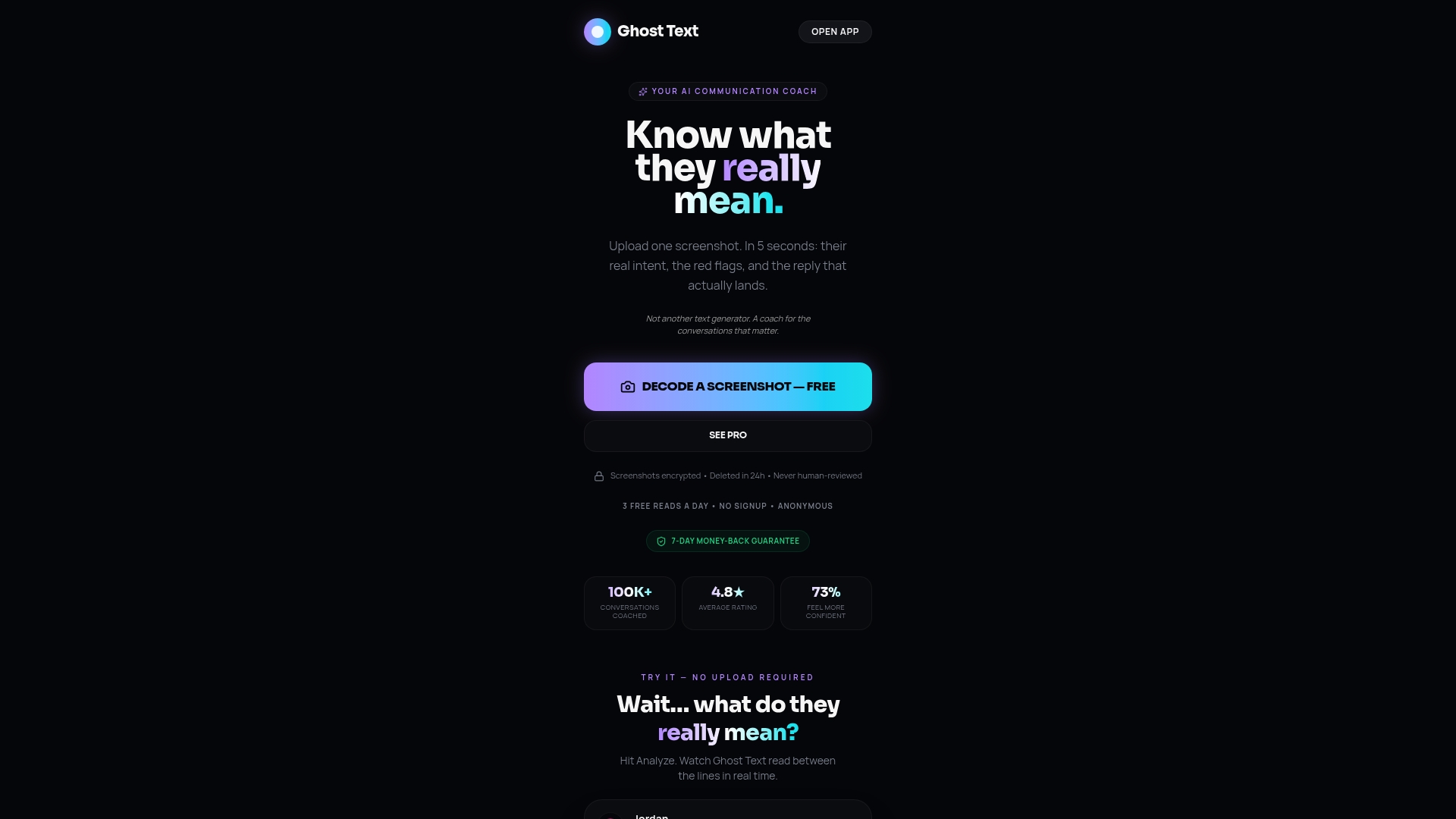
Ghosttextai runs on a freemium model: a few free reads to start, with Ghost Text Pro unlocking unlimited analysis, advanced red flag detection, and premium reply personas. Your conversations stay private. If you're sitting with a thread that doesn't feel right, get a second read now before you reply.
Sources
- 6 things everyone should know about ‘love bombing’ | University of Colorado Boulder
- Signs of love bombing | Love Is Respect
- Understand relationship abuse | The Hotline
If you are in immediate danger, call 911.
This article is general information, not a substitute for advice from a qualified doctor. Consult a qualified healthcare professional about your own circumstances before acting on anything here.