
If someone leaves you on read, wait, then send one short, low-pressure re-opener that fits the context. Never send a second message right away, and never reference the silence. Read receipts trigger a specific kind of anxiety, but the fix is usually a single well-timed text, not a longer explanation. Below you'll find the timing rules, the exact wording to use, and when to stop trying entirely.
TL;DR:
- Wait at least 24 hours before sending a follow-up message unless the situation is time-sensitive.
- Limit re-openers to one per message, avoid referencing the silence, and make responses simple and relationship-appropriate.
- Send low-pressure, value-based, or casual messages tailored to the context, avoiding guilt, blame, or repeated chasing patterns.
- Recognize that being left on read triggers anxiety due to ambiguity, and practical tactics include distraction, venting privately, or turning off read receipts.
- Use tools like Ghost Text to analyze tone and intent before replying, especially in high-stakes situations or ongoing patterns of silence.
Table of Contents
- When Should You Send a Left on Read Response?
- Five Rules Before You Reopen the Thread
- What to Text After Being Left on Read
- Scripts for Higher-Stakes Situations
- Why Being Left on Read Actually Hurts
- How Ghost Text Helps You Read the Room Before You Reply
- What I Learned From Overthinking a Left on Read Text
- Try Ghost Text Before You Hit Send
- Sources
When Should You Send a Left on Read Response?
Timing is the whole game. Send too soon and you look anxious. Wait too long and the moment passes. Here's the breakdown that actually holds up across dating, friendships, and work threads.
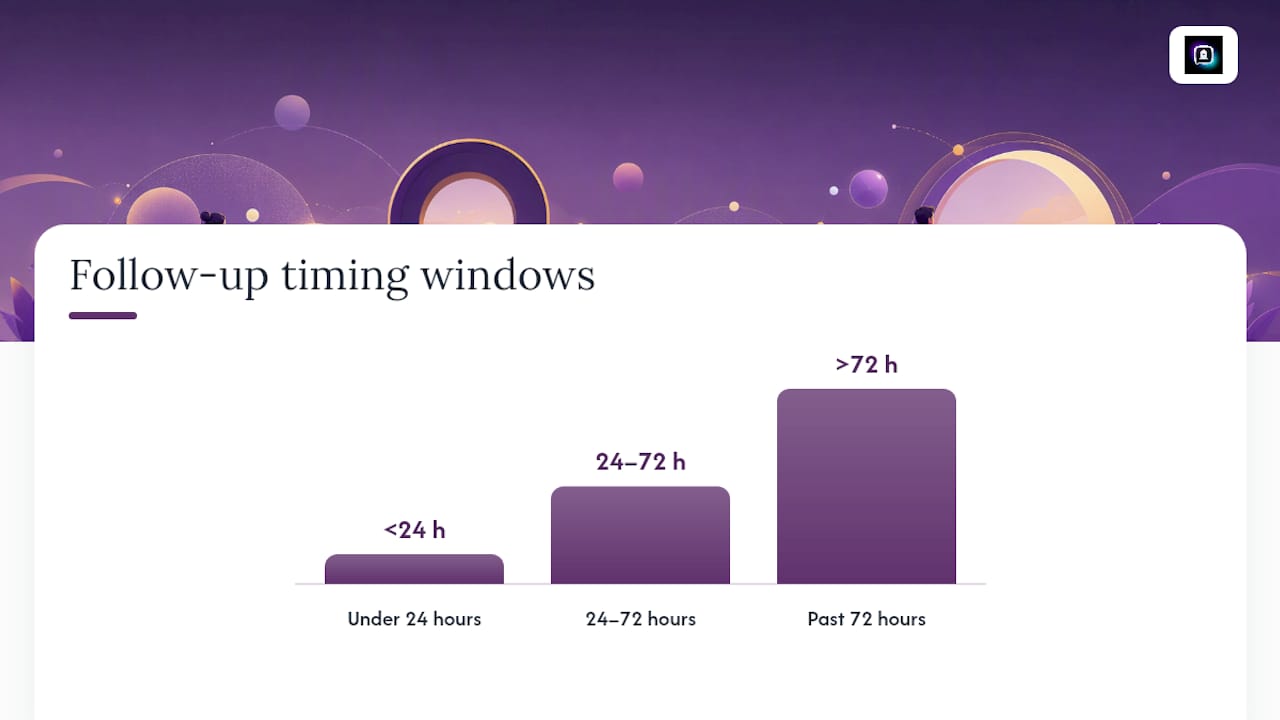
Under 24 hours: hold off. Most read-without-reply situations resolve on their own. People get pulled into meetings, forget to hit send, or mean to reply "later" and lose the thread entirely. Unless the message was time-sensitive (a plan happening today, a work deadline), sending a follow-up inside the first day usually reads as impatient. Guidance on follow-up timing generally backs a 24-hour buffer before you say anything else.
24 to 72 hours: one follow-up, if the original message needed an answer. This is the window where a single, light re-opener makes sense, and one detailed breakdown of what to text next recommends exactly this: wait at least a day, then send something short and new rather than a reminder about the silence. If the original text was just a comment or a meme with no real question attached, you can skip the follow-up altogether. Nothing was actually left unanswered.
Past 72 hours: usually stop, unless there's a concrete reason to reach back out. A concrete reason means real stakes: a shared reservation, a bill split, a project deadline. "I was just wondering how you're doing" doesn't clear that bar after three days of silence. At this point, sending another message mostly signals that you're keeping score.
Repeated pattern: treat it as a boundary issue, not a timing issue. If this is the third time in a month someone reads your texts and vanishes, no amount of follow-up wording fixes that — instead, streamlined communication is vital for creative teams to set and respect boundaries. That's a relationship pattern, and the fix belongs in the next section, not in a cleverer opener.
Here's the decision flow in order:
- Check the clock. Under 24 hours, wait.
- Check urgency. If it's time-sensitive, a short nudge is fine even within 24 hours.
- Between 24 and 72 hours, send exactly one short, new message.
- Past 72 hours, only follow up if there's a concrete, practical reason.
- If this has happened multiple times with the same person, shift from wording to boundaries.
Five Rules Before You Reopen the Thread
Before you type anything, run through these. They're the difference between a re-opener that lands and one that makes things worse.
- One follow-up, maximum. If the first re-opener doesn't get a reply, sending a second one rarely helps. It just extends the record of you reaching out alone.
- Never mention the silence. "Did you see my text?" or "Guess you're busy lol" both name the exact thing you're trying to smooth over. Skip straight to new content instead.
- Make it easy to answer. A question, a piece of news, or something mildly useful gives the other person a reason to type back that isn't obligation.
- Match tone to the relationship and the channel. A group-chat joke works fine over text but reads oddly in a work email. A DM to a new dating match calls for something breezier than a text to a longtime friend.
- If it's a pattern, protect your time instead of chasing. Experts who study these dynamics recommend opening the door once, then stepping back, because repeated chasing tends to reward the silence rather than resolve it.
Pro Tip: If you're itching to send something sharp or hurt, write it in your notes' app first and let it sit. One boundary-focused breakdown points out that venting privately keeps your dignity intact without handing the other person a reaction to feed off. Sleep on it if you can. Almost everything you want to send at 11 p.m. reads differently by morning.
What to Text After Being Left on Read
These are ready to copy. Pick the category that fits your relationship and the level of pressure you want to apply, which should almost always be low.
1. Casual re-openers (low stakes, keeps things easy)
- "Random but this made me think of you" (plus a link, photo, or meme)
- "Okay unrelated question, what's your go-to coffee order"
- "Hey, no pressure to reply, just thought I'd check in"
2. Funny or playful comebacks (friends, low-stakes contacts)
- "I see you [read at 4:47pm], respect the discipline"
- "Cool cool cool, I'll just be over here talking to myself"
- "Update: still alive, still thinking about that thing you said"
3. Direct-but-not-needy lines (when you want clarity, not drama)
- "No worries either way, just let me know if you're in"
- "Totally fine if the timing's off, just want to close the loop"
- "Quick one: yes or no on Friday?"
4. Value-add re-openers (lower the pressure by giving something first)
- "Saw this and thought you'd get a kick out of it" (attach the thing)
- "This reminded me we never finished talking about [topic]"
- "Found the place I was telling you about, sending the link"
5. Plan-related follow-ups (when the original message had real stakes)
- "Just confirming, are we still good for Saturday at 7?"
- "Need to lock in the reservation today, can you confirm by 5?"
- "No rush, but I do need an answer by tomorrow to book it"
6. Work-safe scripts (professional, brief, no emotional weight)
- "Following up on this in case it got buried, happy to resend details."
- "Checking in ahead of the Thursday deadline, let me know if you need anything from me."
- "No action needed if you already handled this, just closing the loop on my end."
Notice what all six categories skip: no guilt, no "???", no "hello???", no reference to the read receipt itself. Reporting on left-on-read etiquette makes the same point. Treat the follow-up as a fresh opener, not a complaint dressed up as a text.
Scripts for Higher-Stakes Situations
Some threads carry more weight than a casual re-opener can handle. These call for slightly more thought.
Dating. State interest plainly or pivot without shaming. "Hey, I liked our conversation and would still love to grab coffee if you're up for it, no worries if not" does the work in one line. Avoid asking why they went quiet. That question rarely gets an honest answer and usually just adds pressure.
Friends. There's a real difference between checking in and setting a boundary. A check-in sounds like: "Hey, haven't heard from you in a bit, everything okay?" A boundary sounds like: "I've noticed I reach out more than I hear back, and I wanted to be honest about that." Save the second one for patterns, not single incidents.
Work. Keep it time-stamped and low-emotion. "Circling back on this before end of day, let me know if you need more time" respects both the deadline and the other person's schedule. Skip any line that implies frustration, even mild frustration. It reads worse in writing than it sounds in your head.
Family. Assume good intent first. "Hey, just checking you got my last message, no rush" preserves the relationship even if the silence stung. Family read receipts tend to carry more emotional weight than they should, mostly because the relationship has more history attached to it.
- Dating: state interest or pivot, skip the "why didn't you answer" question entirely.
- Friends: separate a genuine check-in from an actual boundary conversation.
- Work: stay time-focused, drop any hint of annoyance.
- Family: lead with benign intent, keep it short.
Why Being Left on Read Actually Hurts
The sting is real, and it has a mechanism. Ambiguity is the trigger, not rejection itself. When you don't know why someone went quiet, your brain fills the gap with worst-case guesses, and that uncertainty produces more anxiety than an actual "no" would. Coverage on the topic notes that being left on read commonly sets off rumination, and experts advise catching the story you're telling yourself before it runs unchecked.
- Distract on purpose. Do something that requires attention, not something that lets your mind wander back to the phone.
- Write the vent, don't send it. A private draft gets the frustration out without creating a record you'll regret.
- Sleep on any follow-up. What feels urgent at night rarely feels urgent by morning.
- Consider turning off read receipts. One practical breakdown of the etiquette suggests this removes a layer of anxiety for both sides going forward.
Psychology Today's take on being ignored argues for leaning on self-appraisal instead of waiting on someone else's response to feel okay, paired with practical tactics like setting your own deadlines rather than open-ended waiting. When the pattern repeats, one clear message about how it affects you, followed by stepping back, beats another round of chasing.
How Ghost Text Helps You Read the Room Before You Reply
Sometimes the hard part isn't finding words. It's knowing what the silence actually means before you respond to it. Ghost Text analyzes a pasted conversation or screenshot and flags tone, intent, and red flags, so you're not guessing whether someone's distant, busy, or losing interest.
- Paste the thread or upload a screenshot of the conversation.
- Review the tone and intent breakdown before deciding whether to follow up at all.
- Pick from suggested replies calibrated to the read.
Use it when the stakes are higher than a casual "no worries either way" can cover, or when the same person keeps leaving you on read and you want to know if that's a pattern worth naming.
What I Learned From Overthinking a Left on Read Text
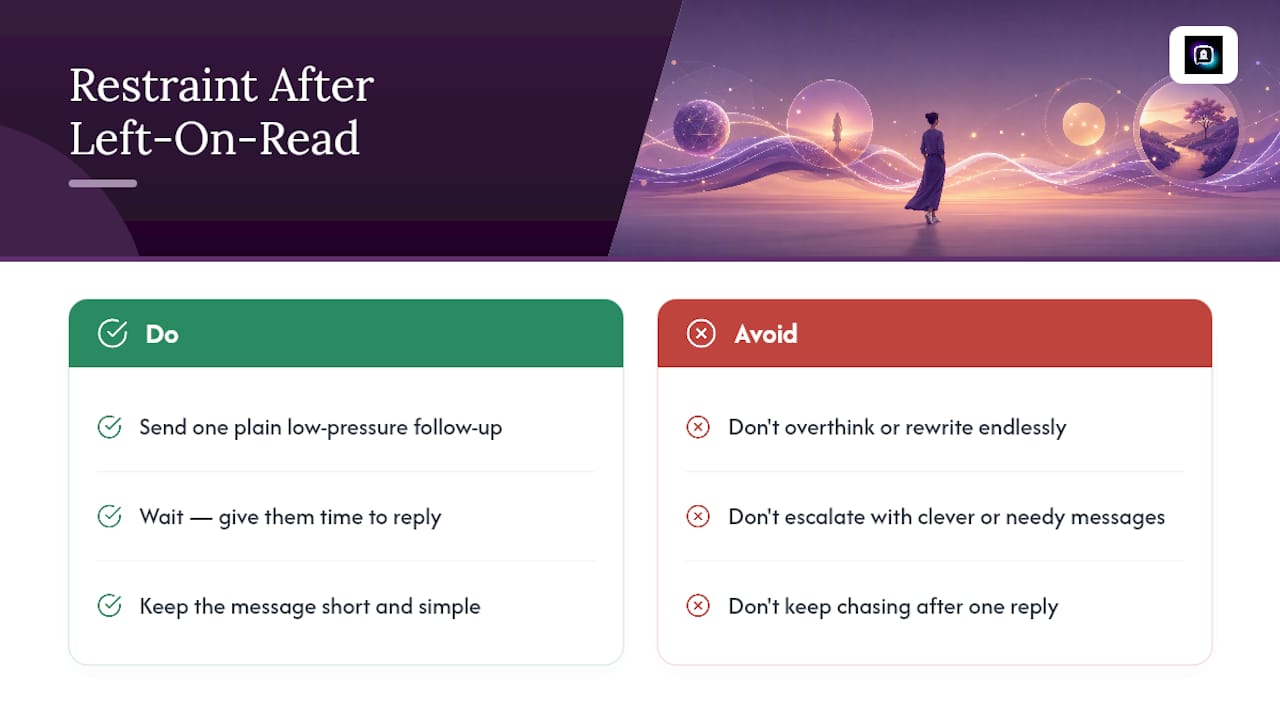
A friend once left me on read for four days after I sent a fairly normal question. I drafted three different follow-ups, deleted all of them, and finally sent one plain line: "No rush, just let me know when you get a chance." She replied within the hour, apologizing for the radio silence. Work had swallowed her week whole.
The lesson wasn't about wording. It was about restraint. The plainest, lowest-pressure message I had beat every clever version I'd talked myself out of. When I've seen the same pattern repeat with other people, the better move has always been to stop chasing after one clear, low-stakes attempt, not to escalate the cleverness of the ask.
— DSean
Try Ghost Text Before You Hit Send
Ghost Text works best right in the moment you're staring at a read receipt trying to decide what to type. Instead of guessing whether someone's tone shifted, whether a joke landed wrong, or whether a pattern of silence means something worth addressing, you get a straight read on tone and intent, plus suggested replies calibrated to the actual conversation rather than a generic template.
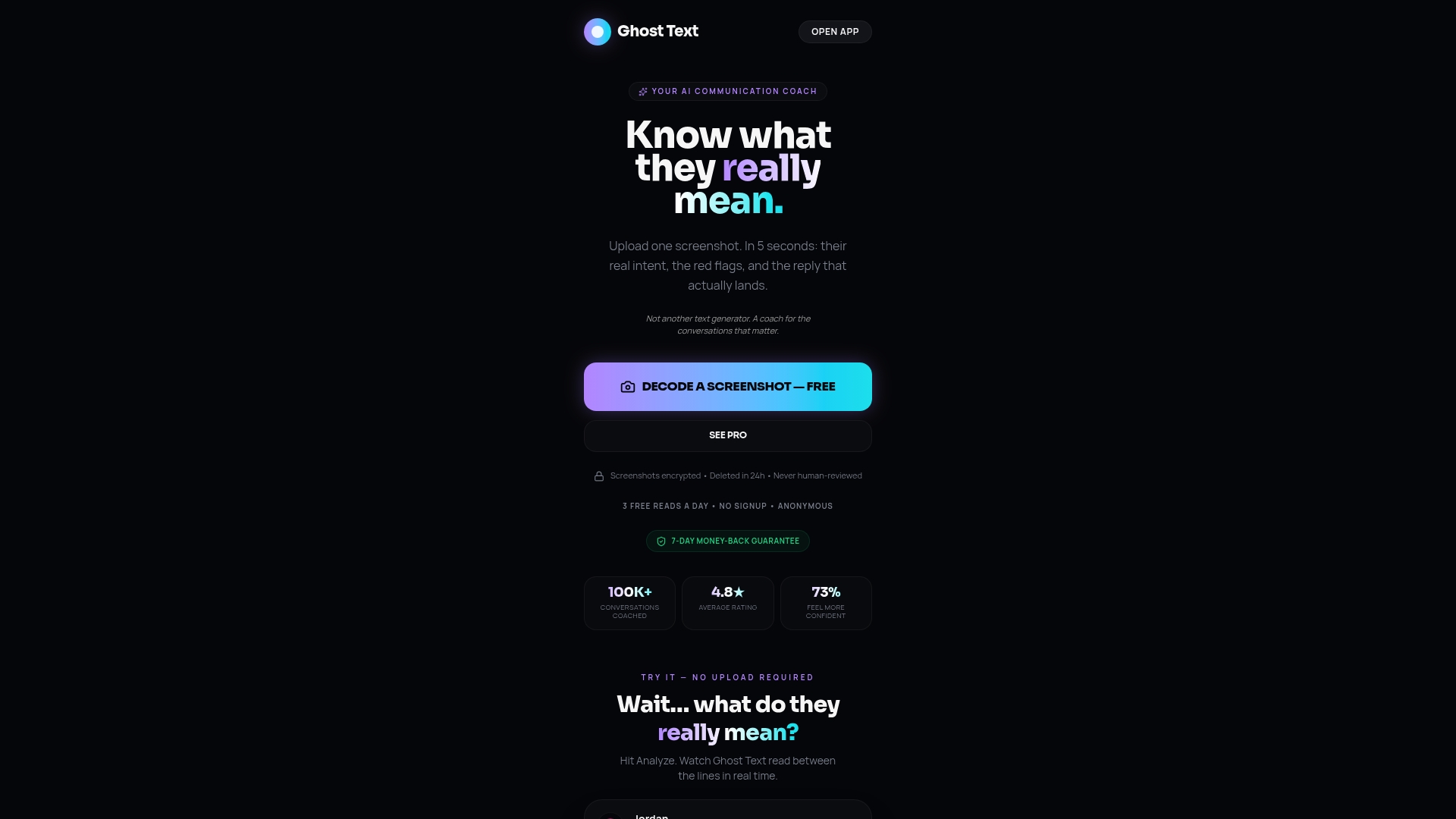
That's especially useful for higher-stakes threads, like a dating conversation gone quiet or a work message you can't afford to misjudge, and it also helps you spot repeated patterns before you've invested more time chasing them. Paste your conversation into Ghost Text and see the suggested replies for your exact situation before you type a single word.
Sources
- 'Left on Read': What It Means and How To Deal
- How to Respond to the Silent Treatment Without Chasing | Boundary Playbook
- When You're Ignored | Psychology Today
- Left on read: what it means and how to handle it (Cosmopolitan)