
Double texting is usually fine — as long as you have a real reason and you wait long enough. The short answer: send a second text when you have something new to add, a logistics question, or a genuine deadline. Don't send one because you're anxious and need reassurance.
Three things to keep in mind before you decide:
- Timing: Wait at least a few hours for casual threads; Hinge data points to roughly four hours as a sweet spot for early dating contexts.
- The main exception: Logistics and urgent info always justify a follow-up, regardless of timing.
- The stop rule: One follow-up, then stop. If they don't respond to two messages, a third won't help.
Keep the tone low-pressure. A short, specific message lands far better than a long one that sounds like you're waiting by the phone.
Key Takeaways
Double texting is acceptable when it adds new information, addresses logistics, or meets a real deadline — not when it's driven by anxiety.
| Point | Details |
|---|---|
| Wait before following up | For casual early-dating threads, wait at least four hours; 24–48 hours is safer for very new connections. |
| One follow-up, then stop | Send one reasonable second message, then leave it alone if there's no reply. |
| Add something new | A follow-up that includes new info, a question, or a deadline lands better than a repeat of the first message. |
| Urgency is always an exception | Logistics and time-sensitive info justify a follow-up regardless of timing rules. |
| Ghosttextai helps you read the thread | Paste the conversation for tone analysis, red-flag detection, and suggested replies before you decide. |
Table of Contents
- What double texting actually means (and what it doesn't)
- When a second text is appropriate (and when it isn't)
- How long should you wait before sending a second text?
- When a follow-up becomes a red flag — and when to stop
- How to double text without seeming needy: sample messages that work
- Seven questions to ask yourself before you hit send
- How to stop obsessing while you wait for a reply
- How an AI communication coach can help you decide
- A quick take on what the rules are really for
- Ghosttextai can read the thread so you don't have to guess
- Sources
What double texting actually means (and what it doesn't)
Double texting means sending a second message to someone before they've replied to your first. That's the whole definition. It's not complicated, but it gets misapplied constantly.
What it is not:
- Multi-part messages: Sending two or three short texts in quick succession as part of one thought ("Hey, are you free Saturday?" / "Around 7?") is normal conversation, not double texting.
- Scheduled reminders: An automated calendar nudge or a reminder app ping is not a double text.
- Replying to yourself with new info immediately: If you hit send and then realized you forgot to include the address, sending it right away is a correction, not a follow-up.
Why does this distinction matter in early dating? Because the perception of neediness is almost entirely about pattern, not individual messages. Experts note that anxiety-driven follow-ups — the kind sent to get reassurance rather than share information — are what actually read as needy. A single, purposeful second message rarely does.
When a second text is appropriate (and when it isn't)
Not every reason to follow up carries the same weight. Here's a quick way to classify your situation:
| Scenario | Acceptable? | Why |
|---|---|---|
| Confirming a time or location for a date | Yes | Logistics require clarity |
| You forgot to include key info | Yes | Corrects a gap, not anxiety |
| Urgent deadline (e.g., tickets expire today) | Yes | Time-sensitive and practical |
| Re-opening a stalled conversation with a new topic | Usually yes | Adds value, low pressure |
| Sending the same message again | No | Signals impatience |
| Late-night "you up?" after silence | No | Pressure-driven |
| Passive-aggressive "guess you're busy" | No | Guilt-tripping, not connecting |
| Seeking reassurance after a fight | No | Emotional pressure, not information |
Two quick examples:
Date logistics: "Hey, just confirming we're still on for Saturday at 7 at Rosie's — let me know if anything changed!" That's clean, specific, and easy to answer.
Casual check-in: "Saw this and thought of you" with a link or meme. Low stakes, adds something new, doesn't demand a reply.
Pro Tip: Before you type anything, scroll up and read the last few exchanges. If they've been slow to reply consistently, that's a pattern — not a sign they missed your message.
How long should you wait before sending a second text?
Timing is where most people get it wrong. Sending a follow-up ten minutes after your first message almost always reads as impatient, even when your reason is legitimate.
- Urgent or logistical: Follow up as soon as the urgency is real. If the restaurant reservation needs a headcount in an hour, don't wait four hours.
- Early dating, casual thread: Hinge's analysis of roughly 300,000 U.S. conversations found that waiting about four hours before a second message improved the likelihood of getting a reply compared to sending just one message. That four-hour window is the most evidence-backed number available for this context.
- Very early stage or first few exchanges: Wait 24–48 hours for casual threads where you don't yet have an established rhythm.
The conservative approach works for a simple reason: it signals patience and self-possession. Someone who can wait a day before following up reads as confident, not desperate.
Hinge data note: The four-hour finding comes from a specific dataset of dating app conversations. It's a useful benchmark, not a universal law. Context, relationship stage, and the content of your original message all shape the outcome.
When a follow-up becomes a red flag — and when to stop
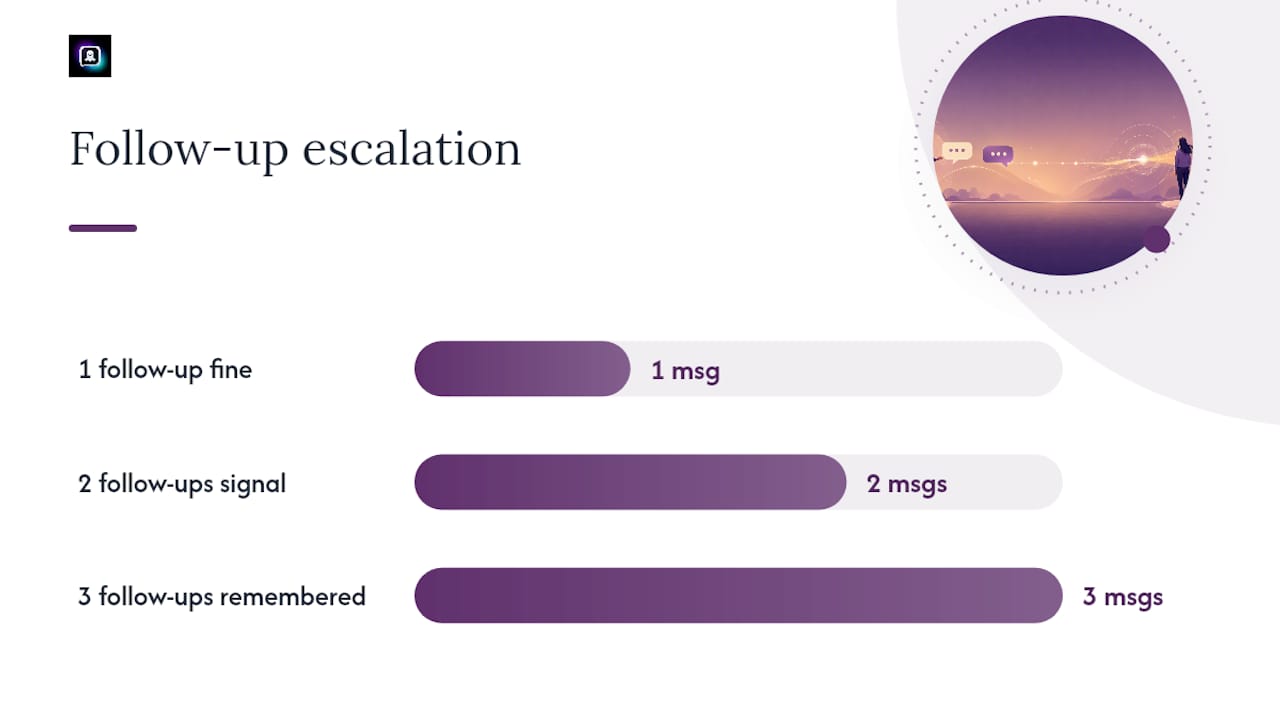
One follow-up is almost always fine. Two follow-ups with no reply is a signal. Three is a pattern the other person will remember.
The stop rule is simple: send one reasonable follow-up, then leave it alone unless they've explicitly asked you to check back in.
Watch for these behavioral cues that mean you should stop entirely:
- Consistent one-word replies after a previously engaged thread
- Read receipts with no reply, twice in a row
- Long delays followed by vague, non-committal answers
- Replies that answer a different question than the one you asked
- Responses that feel polite but closed — no question back, no invitation to continue
These red flags in messaging patterns are worth taking seriously. They're not always a definitive rejection, but they are a clear signal to give the conversation room to breathe.
What not to send:
- "Where did you go?" (sarcastic, puts them on the defensive)
- Three escalating pings: "Hey," then "??," then "Okay then" (reads as hostile)
- A long paragraph explaining why you deserve a reply
Pro Tip: If you're tempted to send a third message, write it in your notes app instead. Read it again in two hours. You'll usually decide not to send it.
How to double text without seeming needy: sample messages that work
The goal is a message that's easy to reply to and doesn't create pressure. Short, specific, and with a clear reason attached.
By intent:
- Logistics/confirmation: "Just checking — are we still on for Thursday? Happy to adjust if something came up."
- New topic re-open: "Random, but I just tried that taco place you mentioned. You were right."
- Urgent/deadline: "Hey, need to know by tonight if you're in for the concert — tickets are going fast."
- Correction: "Forgot to say — the address is 412 Main, not 214. Sorry about that!"
- Light poke from a close connection: "Are you good? Haven't heard from you in a bit."
- Apology/reset: "I think my last message came out weird. Ignore it — how's your week going?"
Dos and don'ts for texting etiquette in follow-ups:
- Do keep it to one or two sentences
- Do add a reason or new piece of information
- Do make it easy to answer (yes/no or a simple choice)
- Don't use sarcasm or guilt ("I guess you're not interested")
- Don't send a punctuation-only ping ("??")
- Don't re-send the original message verbatim
On tone: a light emoji can soften a follow-up and signal you're not upset. Humor works when the thread has been playful — skip it if the conversation has been more serious. Length matters more than you think; a long follow-up after silence reads as anxious, even when the words are calm.
As Hinge's data suggests, re-opening with a fresh prompt outperforms calling out the silence. "Did you see my last message?" is almost always the wrong move.
Seven questions to ask yourself before you hit send
Run through this before any follow-up text. It takes two minutes and saves a lot of regret.
- Is this urgent or time-sensitive? If yes, send it. If no, keep going.
- Does this message add new information? If yes, it's probably worth sending. If it's the same thing rephrased, wait.
- Have they been slow to reply historically? If yes, a delay now is probably not about you.
- Would I be okay if they never replied to this? If no, you may be texting for reassurance — pause.
- Is this the first follow-up, or the second? If it's the second with no reply in between, stop.
- Am I sending this because I genuinely need to, or because I'm anxious? Honest answer required.
- Would I send this message to a friend in the same situation? If it would feel weird to a friend, it'll feel weird to a date.
Olively's guidance frames this well: a follow-up that adds something actionable lands better than one driven by panic. The checklist is essentially a filter for that distinction.
Pro Tip: Use this list as a two-minute pause, not a permission slip. If you're still unsure after running through it, wait an hour and check again.
How to stop obsessing while you wait for a reply
The urge to re-check your phone every five minutes is real, and it doesn't help. Here's what actually works:
- Set a phone timer. Give yourself a two-hour window before you're "allowed" to look at the thread again. It sounds simple because it is.
- Switch activities deliberately. Go for a walk, make food, call someone else. The goal is to break the loop, not suppress it.
- Write the draft, then wait. If you feel like you need to send something, type it out and save it. Read it again in two hours. Most of the time, you'll edit it down or decide not to send it at all.
- Use a reminder app for logistics. If the follow-up is about scheduling or a deadline, set a relationship reminder app or calendar alert instead of texting again. It removes the pressure to manually track it.
- Assume best intent. Experts consistently recommend treating a delayed reply as neutral rather than hostile. Most non-replies are about distraction or busyness, not rejection.
Pro Tip: For any message you're anxious about, set an overnight reread timer. Morning-you will almost always have a clearer read on whether it's worth sending.
How an AI communication coach can help you decide
Sometimes the question isn't just "should I double text?" — it's "what does this thread actually mean?" That's where an AI conversation coach becomes useful.
Ghosttextai analyzes message tone, detects emotional signals, flags red flags in a thread, and generates suggested replies tailored to your specific situation. It's not a replacement for judgment, but it's a fast way to get a second opinion when you're second-guessing yourself.
Three practical use cases:
- Pre-send polish: Paste your draft follow-up and get a tone read before you send it. Is it coming across as casual or anxious? The analysis tells you.
- Thread pattern analysis: Upload a screenshot of the conversation to see whether the other person's engagement is dropping, holding steady, or warming up.
- Urgent/logistics check: When you need to send something quickly and want to make sure the wording is clear and low-pressure, a quick AI review takes thirty seconds.
One note: before uploading any conversation, anonymize names and sensitive details, and review the platform's privacy terms. That applies to any AI tool you use for personal messages.
A quick take on what the rules are really for
The double texting rules aren't about playing games or performing confidence you don't feel. They exist because early dating is genuinely ambiguous, and the way you handle that ambiguity tells the other person something real about you.
Someone who can send one clear, low-pressure follow-up and then genuinely let it go is communicating something valuable: that they have a life, they're not desperate for validation, and they respect the other person's pace. That's not a tactic. It's actually how confident people behave.
The hardest part isn't knowing the rules. It's trusting them when you're anxious. One follow-up, well-worded, sent at the right time — then you let it breathe. That's the whole game.
Ghosttextai can read the thread so you don't have to guess
When you're staring at a conversation trying to figure out whether to follow up, the real problem is usually uncertainty about what the other person's messages actually mean.
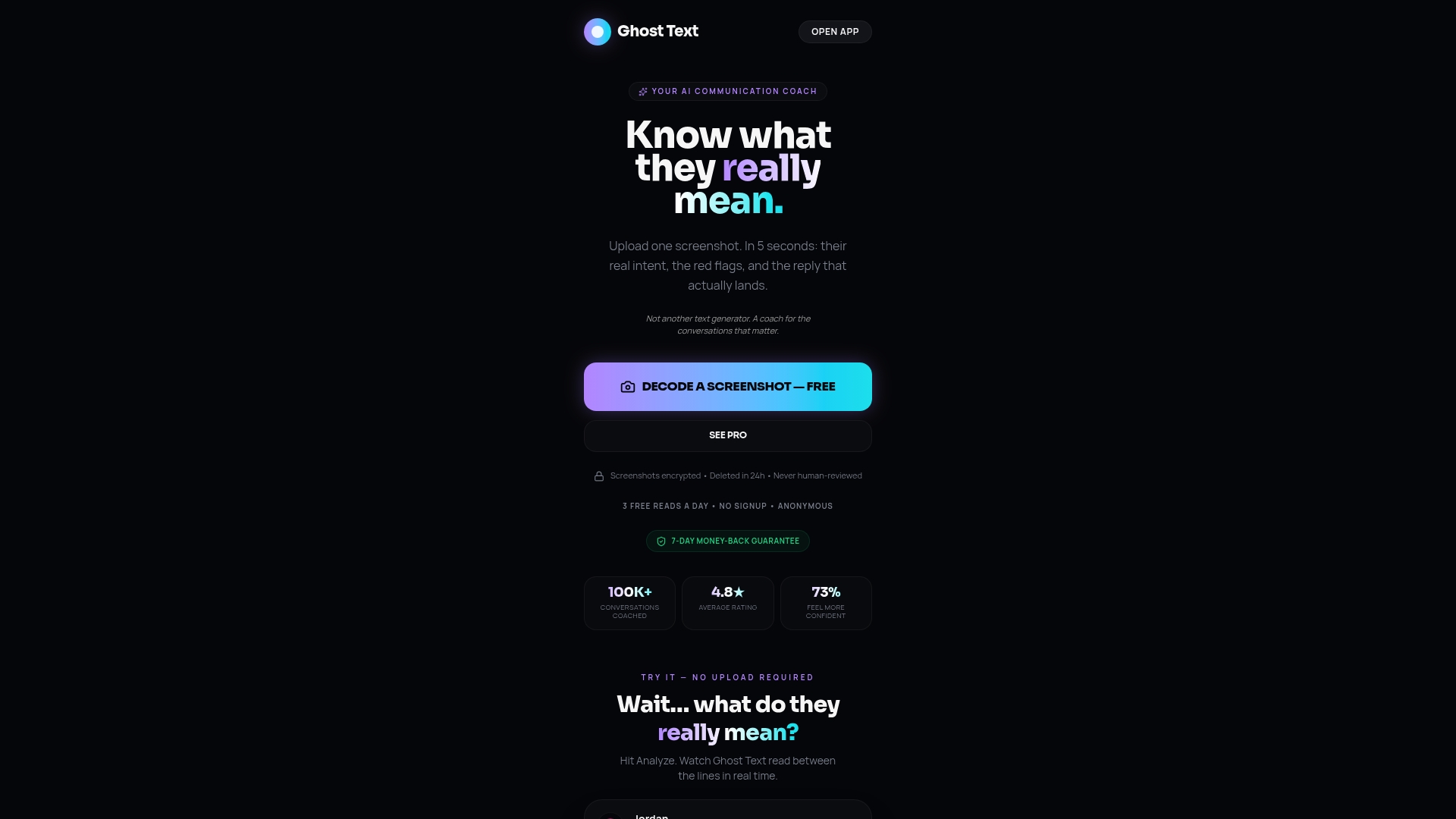
Ghosttextai gives you a fast, clear read on tone, intent, and red flags in any conversation — dating, friendships, or anything in between. Paste a screenshot or type out the thread, and you get instant analysis: what the messages signal, whether the engagement is genuine, and suggested replies you can actually use. The free version covers a solid range of reads; Ghost Text Pro unlocks unlimited analysis, advanced red-flag detection, and premium reply suggestions. If you've been staring at a thread for twenty minutes, try a free read on Ghosttextai and get a straight answer.
Sources
- Double Texting Dos & Don'ts
- Study Shows How Long You Should Wait Before Double-Texting - Business Insider
- A new dating app study pinpoints exactly how long you should wait before sending a second text
- Double Texting: What It Is, When to Text Back, and How to Stop - WikiHow