
A tone indicator is a short tag, usually a forward slash plus a few letters, added to the end of a message to clarify how it's meant to be read. Below is a practical, copy-ready tone indicators list organized by category, with real examples and quick rules so you never misfire a joke or a serious point again.
TL;DR:
- Tone indicators work best when both sender and receiver are familiar with specific tags, but they can cause confusion if the audience is unfamiliar with them.
- Using tone tags at the end of messages and pairing them with plain language improves clarity, especially on informal platforms like Discord and Twitter.
- Overusing tags, especially in professional or high-stakes communication, can diminish their effectiveness and make humor or sincerity less genuine.
- Emojis and punctuation can complement tone tags but lack the precision of a well-chosen indicator, so combining both often yields better understanding.
- The primary skill lies in recognizing when a message may be ambiguous enough to require a tone indicator, rather than memorizing the tags themselves.
Table of Contents
- What Tone Indicators Are and Where They Show Up
- The Master Tone Indicators List by Category
- The 10 Most Common Tone Indicators, With Examples
- How to Use Tone Indicators the Right Way
- Etiquette and the Limits of Tone Tags
- Where AI Fits Into Reading Tone
- Where Tone Indicators Actually Came From
- Why Tone Indicators Don't Always Work
- Emojis, Hashtags, and Other Ways to Signal Tone
- The Real Value of a Tone Tag Isn't the Tag Itself
- Get a Fast Read on a Confusing Text
- Sources
What Tone Indicators Are and Where They Show Up
Text strips out everything your voice and face normally handle: the smirk that makes an insult a joke, the pause that signals sincerity. A tone indicator fills that gap. It usually takes the form of a slash followed by a short tag ("/j" for joking) or, less often, a brief descriptive phrase ("/genuinely curious") when the shorthand might not land.
You'll see them most in:
- Group chats and Discord servers, where fast, ambiguous banter needs a clarity flag
- Twitter and Reddit threads, especially on divisive topics
- Texting between friends who've adopted the habit as shorthand
- Support communities and forums for neurodivergent people, who often rely on tone tags to reduce misinterpretation tied to lost vocal and facial cues
They're not internet slang for slang's sake. They're a workaround for a real information gap.
The Master Tone Indicators List by Category
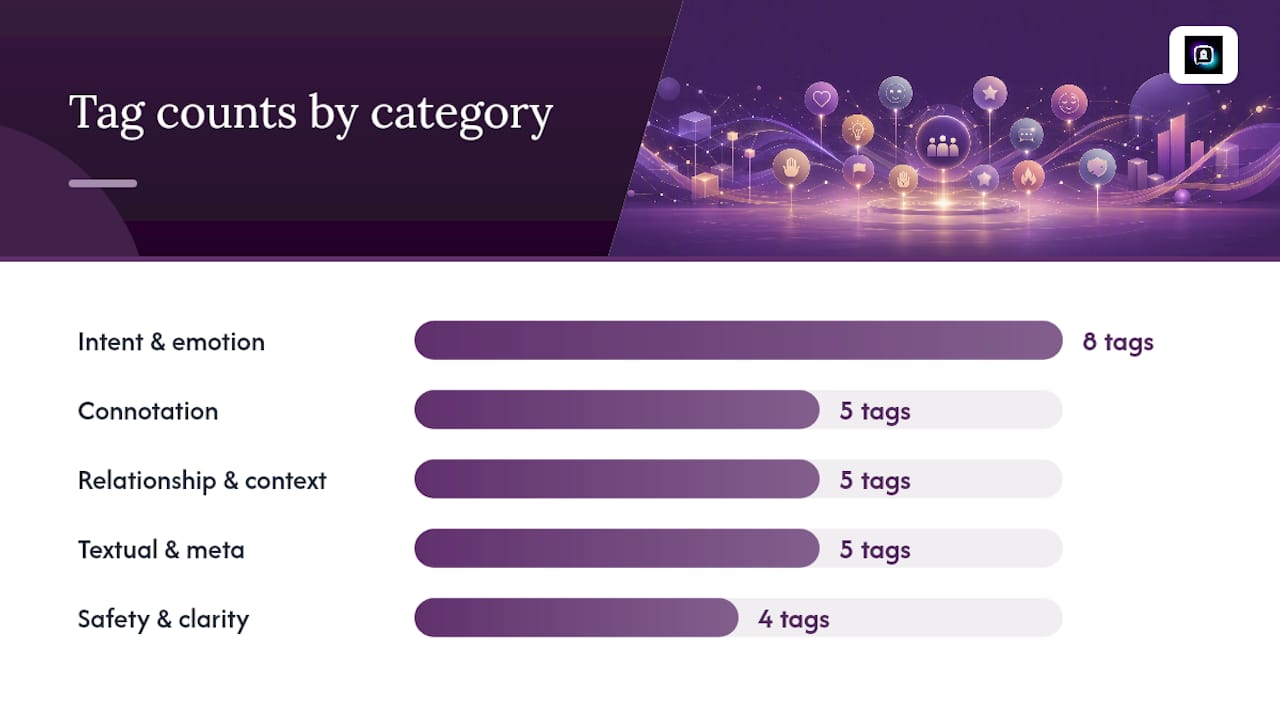
This is the reference you'll want to bookmark. Tags are grouped by what they actually do, with the shorthand first and a plain-English alternative where one is common.
Intent and emotion
/j— joking/hj— half joking/nj— not joking/srs— serious/nsrs— not serious/lh— light-hearted/exci— excited/sad— sad or disappointed
Connotation (positive, negative, neutral)
/pos— positive connotation, said kindly/neg— negative connotation, meant critically/neu— neutral, no emotional charge intended/genor/g— genuine, asked or said in good faith/rh— rhetorical question, no answer expected
Relationship and context
/f— friendly/p— platonic/r— romantic/c— familial or casual close relationship/fam— said as if to family
Textual and meta tags
/t— teasing/ref— referencing a joke, meme, or inside reference/hyp— hyperbole, exaggerated for effect/li— literal, take this exactly as written/nf— nonfactual, not stating a fact
Safety and clarity tags
/cb— clickbait, the headline exaggerates/vent— venting, not asking for advice/qpor/q— genuine question/ij— inside joke, won't make sense out of context
This list draws heavily on the categories maintained by community reference guides like the tone indicators master list and the more recently compiled version at Mines, which walks through usage patterns alongside the tags themselves. Nobody uses all forty-plus variants that circulate online. Pick the dozen that match how you and your circle actually talk, and skip the rest.
The 10 Most Common Tone Indicators, With Examples
/j(joking). "You seriously ate the last slice? /j" reads as a friendly jab, not an accusation./s(sarcastic). "Oh great, another Monday /s" flips a flat statement into obvious sarcasm./lh(light hearted). "You always do this /lh" softens what could read as a complaint./hj(half joking). "You need to call your mom more /hj" signals real concern wrapped in humor./srs(serious). "I need to talk to you about something /srs" tells the reader to drop the jokes./genor/g(genuine). "How did you afford that trip /gen" clarifies you're actually asking, not being snide./pos(positive). "You look different /pos" removes any chance the comment reads as an insult./neg(negative). "That outfit is a lot /neg" makes the criticism explicit instead of deniable./p(platonic). "I love you /p" avoids romantic confusion between friends./r(romantic). "I love you /r" draws the line the other direction.
Pro Tip: Never use /srs as a joke to soften an insult. That tag exists specifically so the reader knows you mean it, and treating it as a punchline trains people to stop trusting the tag entirely.
How to Use Tone Indicators the Right Way
Placement is simple: tags go at the end of the sentence they modify, right after the punctuation or in place of it. "That was a bold move /j" works. Burying the tag mid-sentence doesn't.
A few rules that keep you from overdoing it:
- Use shorthand tags with people who already know them; switch to a short descriptive phrase like "/half serious" for anyone outside that circle
- On public posts, especially about sensitive topics, put a tag near the start too, not just the end, so readers get context before they finish the sentence
- Match formality to the platform: shorthand fits Discord and texting, but a professional Slack message calls for plain wording over cryptic slashes
- Before posting anything ambiguous, run this checklist: does this need a tag, will my audience recognize it, and would a plain sentence be clearer anyway
Etiquette and the Limits of Tone Tags
Tone indicators aren't a shield. Tagging something /j doesn't excuse a genuinely harmful comment, and tacking a slash onto every sentence dilutes the ones that matter. Save tags for lines that would actually be misread. In high-stakes or professional exchanges, skip the shorthand and just write the sentence clearly. And if someone tells you they find a specific tag confusing or unwelcome, drop it for them.
Where AI Fits Into Reading Tone
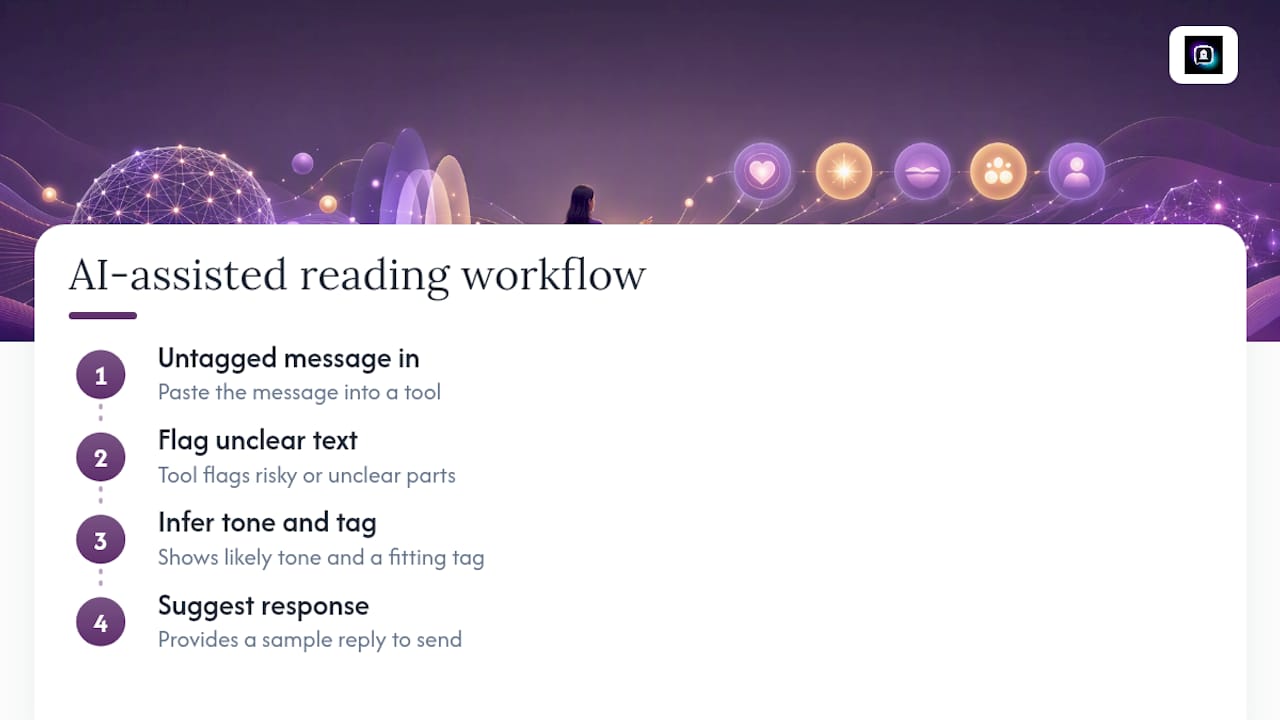
Sometimes the ambiguity isn't yours to fix. A text lands in your inbox with no tag at all, and you're left guessing whether it's a joke, a jab, or a real question. AI tools built for this can flag the risky or unclear parts of a message and suggest what tone was probably intended, plus how to respond. Paste the message into a tool like Ghost Text, and it shows you the likely tone, a fitting tag if one applies, and a sample reply.
Where Tone Indicators Actually Came From
The problem is centuries old. Writers have been inventing punctuation to signal tone since at least the 1500s, when English printer Henry Denham proposed the percontation point, a backward question mark, to mark rhetorical questions. It never caught on widely, but it proves the itch is nothing new: plain text has always struggled to carry sarcasm, sincerity, or a raised eyebrow. Sentence markers like this show up again and again across the history of tone indicators, each attempt failing to stick for the same reason: adoption requires a community small and consistent enough to agree on a shared code.
The modern slash-tag format took root online for that exact reason. Early adopters were tight-knit communities, particularly on Tumblr and later Discord, where autistic and otherwise neurodivergent users pushed for a standardized way to flag sarcasm and sincerity without relying on tone of voice. The format spread because it was low effort: no special characters, no formatting, just a slash and a couple of letters anyone could type on a phone keyboard. Twitter and TikTok picked it up next, mostly among younger users already fluent in internet shorthand, and it slowly leaked into gaming voice chats, group texts, and even some workplace Slack channels among younger teams.
What's notable is that the list has never been standardized by any single body. There's no official dictionary. Different servers and different friend groups have quietly built their own dialects of tags, which is exactly why cross-checking a tag's meaning before using it with a new audience still matters.
Why Tone Indicators Don't Always Work
Tone tags solve a real problem, but they come with real friction. The biggest issue is that they only work when both people already know the code. Send /lh to someone unfamiliar with tone indicators and you've added confusion instead of removing it. That's the tag most prone to being misread outright, since "light hearted" gets confused with "literally" by newcomers, which is why pairing it with a short clarifying phrase helps more than most tags.
There's also a fairness problem. Tone indicators assume the reader is fluent in a fairly niche internet convention, which excludes older users, professional contacts, and anyone outside terminally online spaces. Drop a /gen into a work email and you'll get a confused reply, not clarity.
Critics also point out that tags can become a crutch. If you need a slash to signal every joke, the joke usually wasn't landing on its own, and some writers argue over-tagging flattens humor and sincerity alike into a checklist. Overuse is its own failure mode: a sentence followed by three stacked tags reads as anxious rather than clear.
Finally, a tag doesn't retroactively fix intent. Tacking /j onto something genuinely cruel doesn't make it less cruel. It just gives the sender a technical excuse, which is a big part of why etiquette guides stress using tags for genuine ambiguity, not as cover.
Emojis, Hashtags, and Other Ways to Signal Tone
Tone indicators aren't the only tool for this job, and they're not always the best one. Emojis do similar work with less friction because almost everyone already reads them intuitively. A winking face or a skull emoji can carry the same "I'm joking" signal as /j without requiring the reader to know a shorthand code at all. The tradeoff is precision: emojis are broader and more open to individual interpretation, where a tag like /hj narrows the meaning to one specific thing.
Hashtags occasionally do lighter versions of the same job, mostly on Twitter and Instagram, where something like #sarcasm or #notreally gets appended to a caption. It's clunkier and less standardized than a tone tag, but it serves the same purpose of retroactively framing a statement.
Punctuation tricks predate all of this. Excessive exclamation points, ellipses to imply hesitation, and ALL CAPS for emphasis are informal tone signals people have used in texting for decades, long before slash tags existed. None of these are as precise as a dedicated tag, but they're more universally understood, which is exactly the tradeoff worth weighing: tags for precision within a community that knows the code, emojis and punctuation for broader audiences who don't.
The smartest approach often combines them. A message might pair a genuine emoji with a /gen tag for redundancy, covering readers who know the shorthand and those who don't.
The Real Value of a Tone Tag Isn't the Tag Itself
The conventional advice treats tone indicators like vocabulary you memorize and deploy correctly. That's backwards. The actual skill is noticing when a sentence is ambiguous enough to need a tag in the first place, and most people never build that instinct because they're focused on getting the shorthand right instead.
Here's what gets underrated: a tag only works if your specific audience recognizes it, which means the "correct" list of tone indicators is really a moving target based on who you're talking to. A /hj that reads perfectly clear in a Discord server full of Gen Z gamers will confuse a coworker on Slack. Treating this master list as universal, rather than as a starting menu you customize per audience, is where most people go wrong.
If you're prioritizing anything here, prioritize the judgment call over the vocabulary. Ask whether a sentence could be misread before you write it, not after. The tag is the easy part. Knowing when you need one is the actual skill.
— DSean
Get a Fast Read on a Confusing Text
Sometimes the message you're trying to decode has zero tone indicators at all, and you're the one stuck guessing. That's the exact gap Ghosttextai fills: paste in a screenshot or a conversation and it flags the likely tone, points out anything that reads as a red flag, and hands you a suggested reply so you're not stuck rereading the same text for the tenth time.
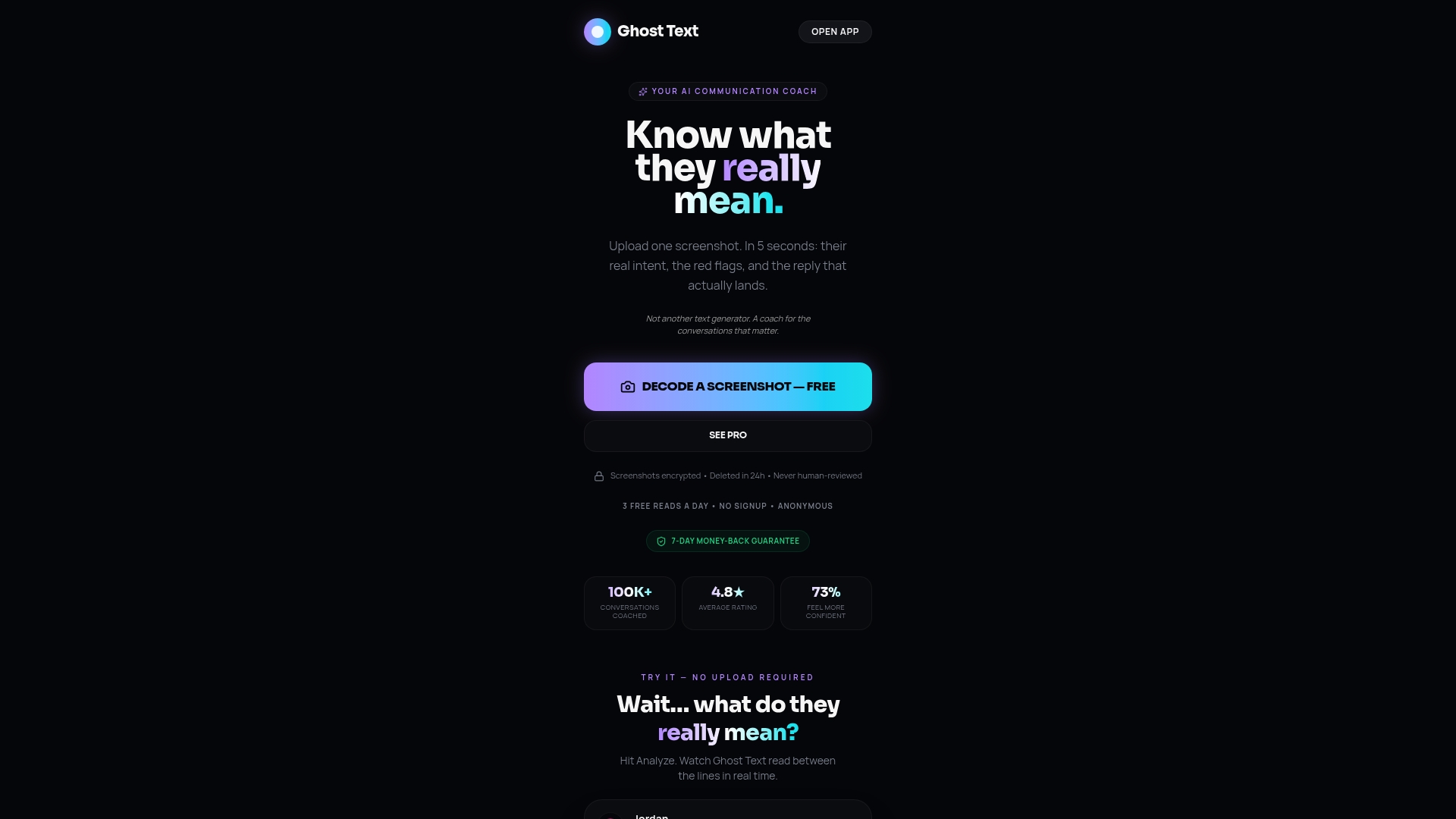
It works across various personal and professional conversations, covering many situations where a missing tone tag might cause misunderstandings. If you've ever sat there wondering whether a text was serious, sarcastic, or something worse, run it through Ghost Text and get a straight answer instead of a guess. Try a sample analysis on the site and see what it flags on your own conversations.