
Sometimes yes, sometimes no. Breaking up over text is acceptable when safety, distance, or a short-lived relationship makes it the smarter move, and it's usually a bad call when you've built a life together. Three things decide which side you're on: how serious and entangled the relationship is, whether you can physically or emotionally manage a live conversation, and whether staying quiet until you're face to face puts you at risk.
- Skip the text and talk in person or by phone if you live together, share finances, or have been together for months or years.
- Text is reasonable if you've been dating briefly, you're long distance, or you feel unsafe raising the subject in person.
- Text is often the safest choice if there's any history of controlling or abusive behavior.
The rest of this guide covers exactly how to word the message, what to do when the replies start coming in, and where to go if things turn unsafe.
Key Takeaways
A text breakup works when it's short, direct, and matched to a situation where safety or brevity genuinely calls for it, not when it's used to dodge a hard conversation you're capable of having.
| Point | Details |
|---|---|
| Match the method to the relationship | Long-term, live-in, or entangled relationships deserve an in-person or phone conversation. |
| Text fits specific cases | Safety concerns, brief relationships, long distance, or high anxiety all justify a text breakup. |
| Follow the four-part structure | Acknowledge, state the decision, give one reason, set a boundary, and close with a final line. |
| Reuse one boundary phrase | Repeating the same line stops a breakup from turning into a drawn-out text debate. |
| Ghost Text checks your draft | Use it to review tone and clarity on a breakup text before sending, not to replace safety steps. |
Table of Contents
- When You Shouldn't End a Relationship by Text
- When Breaking Up by Text Actually Makes Sense
- How to Write a Breakup Text That Actually Works
- How to Handle Replies Without Getting Pulled Back In
- Staying Safe After You Hit Send
- A Few Honest Words on Doing This Right
- Sources
When You Shouldn't End a Relationship by Text
A text breakup strips out everything nonverbal, tone, pauses, the look on someone's face when the words land, and that absence tends to make things worse, not easier. SELF's reporting on text breakups found that therapists consistently point to in-person or phone conversations as the better route when there's no safety reason to avoid them, because two-way dialogue lets both people ask questions and actually process what's happening in real time.
A few situations almost always call for a live conversation instead:
- You've been together more than a few months, especially for a long duration.
- You live together, share a lease, a pet, or joint finances.
- You share close friends, a workplace, or family ties that make an abrupt text feel like a public snub.
- The other person has been fully invested and deserves the chance to ask questions on the spot.
If a live talk is genuinely necessary but you're dreading it, schedule it deliberately. Pick a phone call over a surprise drop-in, choose a neutral time when neither of you has somewhere to rush off to afterward, and give a heads-up like "can we talk tonight, it's important" so it doesn't feel like an ambush.
Pro Tip: If you're nervous about freezing up or over-explaining once you're on the call, write down your one sentence reason beforehand. Having it in your head keeps you from rambling into false hope territory.
When Breaking Up by Text Actually Makes Sense
Texting isn't automatically the coward's way out. It's often the responsible choice, particularly when a live conversation would put you at emotional or physical risk. SELF notes that texting can be the safer path when you're leaving a controlling or abusive relationship, since it avoids putting you in a room with someone who might escalate.
Beyond safety, a few other situations make text the reasonable pick:
- You've been dating briefly. Therapists and relationship coaches point out that for short, early-stage dating, a direct final text is socially acceptable and avoids wasting anyone's time.
- You're long distance and a phone or video call feels performative for something that needs to end simply.
- You deal with social anxiety, panic, or PTSD that makes confrontation genuinely destabilizing.
- You've already tried talking and it turned into an argument every time.
Texting can also protect you from coercion in ways an in-person conversation cannot, according to Psychotherapy for Young Women. The real test isn't how long you dated. It's whether you can say what you need to say clearly and safely through any other channel. If the answer is no, text is not a lesser option, it's the right one.
How to Write a Breakup Text That Actually Works
Every solid breakup text follows the same shape, whether the relationship lasted three weeks or three years:
- Acknowledge the relationship or the person's feelings briefly.
- State the decision plainly. Don't bury it in a paragraph of preamble.
- Give one short reason. Not five. One.
- Set a boundary or handle logistics (no contact, when belongings get returned, etc.).
- Close with something human but final.
Therapists advise keeping the message short and direct, and warn that over-explaining by text tends to invite arguing or give false hope, since soft, vague phrasing reads as negotiable even when you don't mean it that way. Never send it after a few drinks, and if there's any safety concern, plan to be near someone or have your phone charged before you hit send.
A few adaptable templates:
- Casual/early dating: "Hey, I've enjoyed getting to know you, but I don't think we're the right match. I don't want to keep dating. Take care."
- Serious but final: "I've thought about this a lot, and I've decided to end things. This isn't a reaction to one moment, it's been building. I care about you, and I need this to be final."
- Safety-focused: "I've decided to end this relationship. Please don't contact me. I mean this seriously."
- Logistics-only (belongings): "I'll leave your things at [location] by [date]. Let me know a time that works, or I can drop them off."
Keep phrasing direct rather than open-ended, since ambiguous language like "I need space" often reads as a maybe when you mean a no, as SELF's expert sources point out.
How to Handle Replies Without Getting Pulled Back In
Once the text is sent, the reply usually falls into one of four buckets: anger, bargaining, crying, or silence. Have a single boundary line ready and reuse it, no matter how the other person pushes.
- Anger: "I understand you're upset. My decision is final, and I won't be discussing it further."
- Bargaining: "I hear you, but this isn't up for debate. I need you to respect that."
- Pleading or crying: "I know this hurts, and I'm sorry for the pain. I still need this to be over."
- Silence for days, then a reappearance: You're not obligated to explain again. Repeat your original boundary or don't reply at all.
Once a breakup turns into a back and forth debate over text, it rarely produces the closure either person is after. A single reusable boundary phrase beats a fresh explanation every time someone pushes back.
Limited practical follow-up (arranging belongings, splitting a lease) is fine to answer. Emotional re-litigating is not. If a reply includes threats of self-harm, harassment, or violence, stop responding immediately, screenshot everything, tell a trusted friend, and contact local authorities or a crisis line without delay.

Pro Tip: Save every message from the moment things turn threatening, even ones that seem minor. Screenshots build a timeline you may need later, and you won't remember exact wording after the fact.

Staying Safe After You Hit Send
Confusion after a breakup tends to prolong distress, so clarity matters, but so does protecting yourself in the hours and days after. Peer-reviewed research on breakup outcomes links vague, unclear endings to longer emotional fallout, which is one more reason to keep your message direct the first time.
- Tell someone you trust where you'll be and that you've ended things, especially if there's any history of volatility.
- Adjust your privacy settings on social media and location-sharing apps before or right after sending the text.
- Keep belongings logistics separate from the breakup message itself, one text to end things, a different one later for keys or a toothbrush.
- Reach out to a specialist resource if you're worried about stalking or retaliation. The Stalking Prevention, Awareness, and Resource Center offers safety planning and direct contact options.
- Give yourself room to feel it. A clean, well-worded text doesn't cancel out grief. Talk to a friend or a therapist if the aftermath sits heavier than expected.
| Point | Details |
|---|---|
| Safety comes first | If you fear retaliation, contact a stalking or domestic violence resource before you send anything. |
| Separate emotional and logistical messages | Keep the breakup text distinct from any follow-up about belongings or shared accounts. |
| Aftercare matters | A short, clear message doesn't erase the emotional weight, plan for support afterward. |
Who's Behind This Guide
This piece was put together by DSean, drawing on counseling and psychology reporting on breakup communication rather than personal anecdote. Ghost Text, the AI communication coach behind this site, complements that judgment by helping you check tone, flag red flags in a conversation, and get a suggested reply before you send it.
- Tone analysis that flags whether your draft reads as clear or accidentally wishy-washy.
- Red-flag detection for gauging how a conversation might escalate.
- Suggested replies you can adapt for ending a text thread cleanly or handling a tense reply.
AI coaching helps you draft better. It's not a substitute for the safety steps above.
A Few Honest Words on Doing This Right
There's no clean way to end things that leaves both people feeling fine about it. Some guilt over choosing text is normal, even when it's the right call. What matters more is that your message is clear, your boundary holds, and your safety comes first. Use the templates above, lean on Ghost Text when you're stuck on wording, and don't skip the safety steps if anything feels off.
— DSean
Draft Your Breakup Text With Ghost Text
Ghost Text gives you a second set of eyes before a message you can't take back leaves your phone. Instead of guessing whether your wording sounds final or accidentally leaves the door open, you paste in your draft and get a read on tone, clarity, and whether it might invite arguing back.
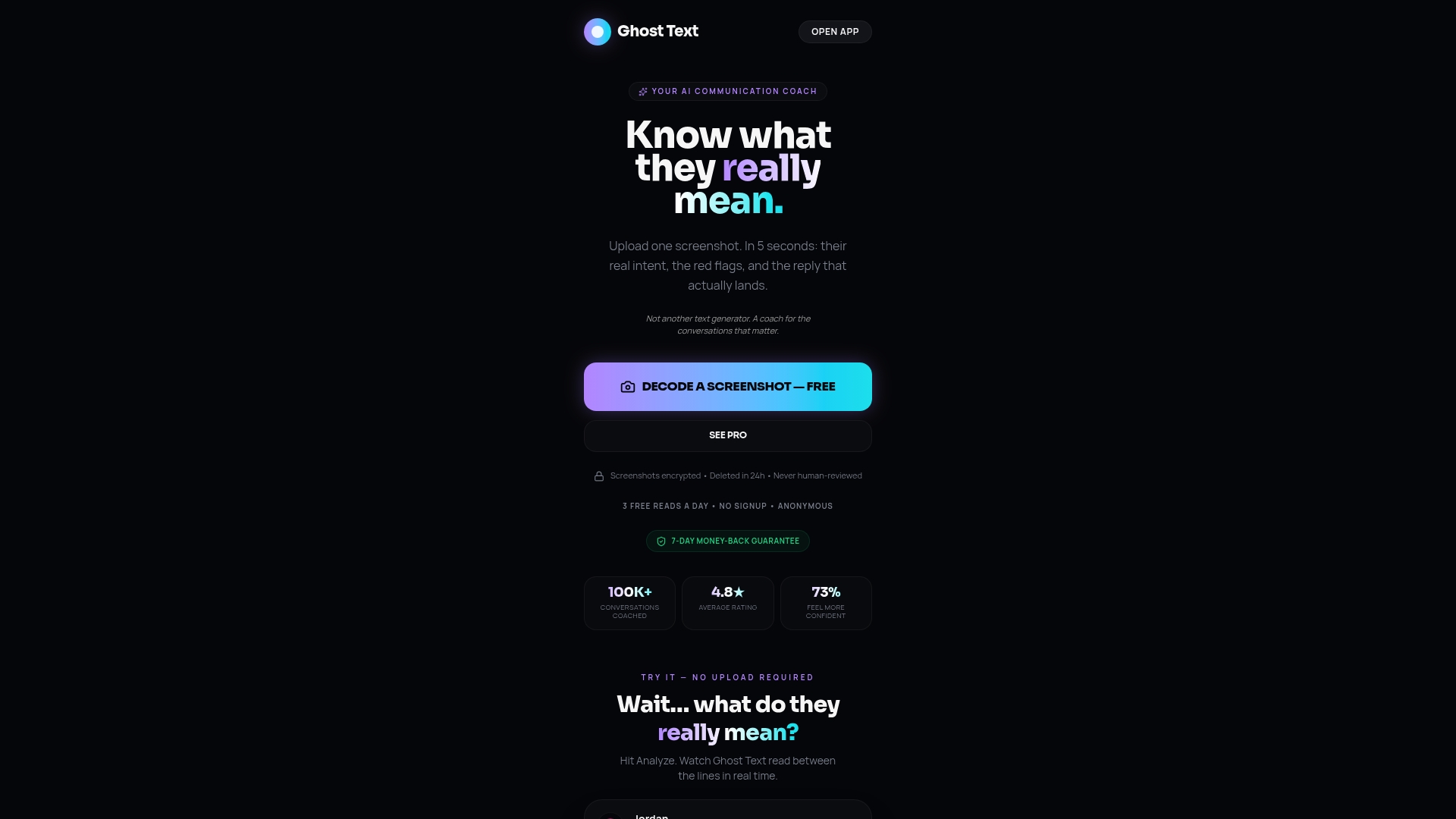
For a breakup text specifically, that means catching the soft phrasing that reads as "maybe later" when you mean "no," and getting a suggested rewrite that stays direct without sounding cruel. The tool also flags red flags in incoming replies, useful if you're bracing for pushback and want to know how to respond without getting pulled into a drawn-out back and forth. One caution worth repeating: keep sensitive personal details, addresses, financial specifics, anything you wouldn't want stored, out of any tool you use, including this one. If you want to see how your draft lands before you hit send, try Ghost Text and paste in your message.
Sources
- Breaking Up Over Text: Is It Ever Okay? | SELF
- Academic article on breakup outcomes | PMC
- Stalking Prevention, Awareness, and Resource Center — Contact